Genesis 25:9: Two sons at one grave, on the only ground he ever owned
Read it →Commentary on Genesis 25:9
Abraham is dead, and his two sons stand at the same grave — the son of the promise and the son of the slave woman. The verse also names the burial ground with care: a cave, a field, and the man Abraham bought it from.
Two sons at one grave
Ishmael, the son cast out years before, still stands at his father's grave. Kelly sees a shared loss bringing two very different men side by side.
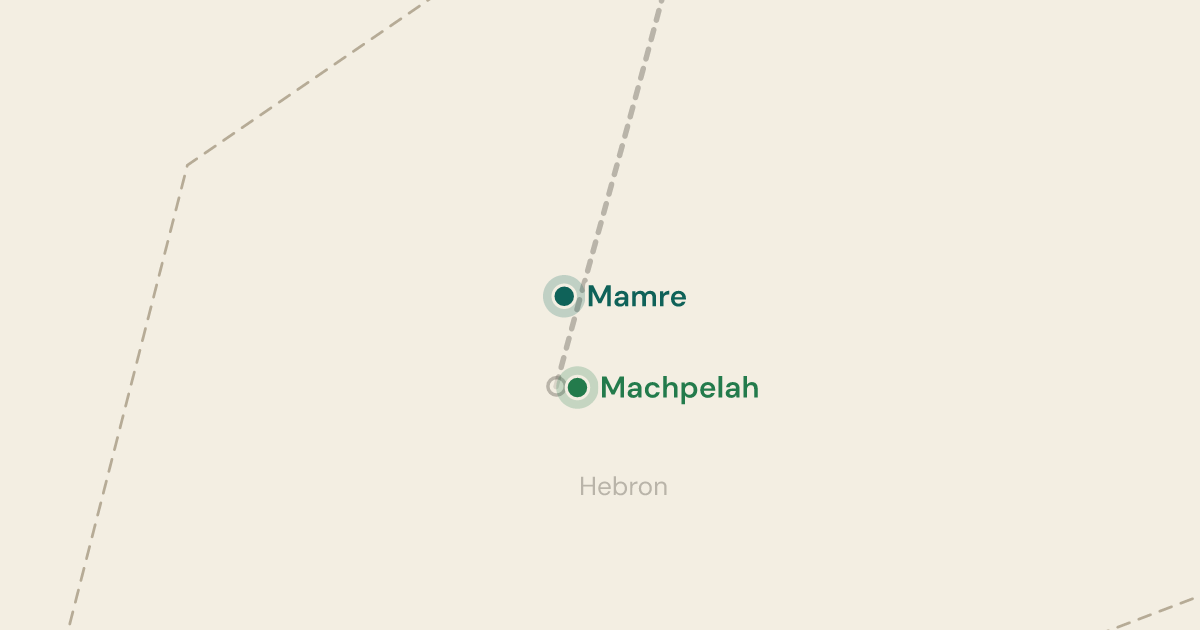
Here we read that "Isaac and Ishmael his sons buried him in the cave of Machpelah," in the field Abraham had bought from Ephron, where Sarah already lay. The son of the slave woman was in no way forbidden to honour his parent in this way. He had to be "cast out" in the presence of the child of promise, and he was. Yet the natural family tie still has its place. The son of the free woman does not dispute it; he is gracious. Before God their feelings may have been as far apart as spirit and flesh, the two things that marked them out. But at the grave, at least, they stood together in the sorrow of loss. They shared a loving memory of the man who was gathered to his people, "the friend of God."
What death does to hard hearts
Kelly finds the same scene later in the family, and draws a rule from it.
Esau and Jacob came to bury their aged father, just as Isaac and Ishmael had buried theirs. Death has a powerful and subduing voice for the heart of man, even where faith is absent. It was not for believers to keep their close relatives away from the grave. They were to welcome them there instead. Many a self-seeking and proud soul has bowed there under the solemn issues of salvation on the one hand and judgment on the other.
Ishmael's presence
Willis weighs what Ishmael had to swallow to stand at that grave.
Ishmael was very likely jealous of the little boy who, instead of him, had become "heir of all things"; it would have been almost unnatural if he had not been. Remembering this, it is a real pleasure to find Ishmael with Isaac burying his father (Gen. 25:9). Surely we may see that God was working in his heart.
A field bought, never owned
The verse names the man Abraham bought the field from. Kelly says that purchase settles what Abraham owned in Canaan.
God's gift is absolute and still future. Buying a burial place from the Hittite confirms this; it does not weaken it or cut into it. For who would think of buying land he already owned? There Abraham lays his dead in land so clearly not his own that he has to buy it. The purchase is the pledge to faith that he will have the land one day… "By faith he went to live in the land of promise, as in a foreign land, living in tents with Isaac and Jacob, heirs with him of the same promise" (Heb. 11:9).
Laid down in hope of rising
Burial in Canaan looked forward, not only back.
Abraham was buried with Sarah in the cave he had bought from Ephron (Gen. 23:19-20). The circumstances then pointed to the promise of Sarah's future resurrection. It was the same with Abraham. He believed with all his heart that God was able to raise the dead (Rom. 4:17-21).
His family did the same after him.
In the faith of God's promise he was careful to lay Sarah's body to rest in the Promised Land… Later, in the same faith, the sons of Isaac bury their father at Hebron, in the land of Canaan (Gen. 35:27-29). Jacob dies in Egypt, yet in due time his sons too bury him in faith in the land of Canaan, in the cave of Machpelah (Gen. 50:13).
The story moves on to Isaac
With the burial, one chapter of the account closes and another opens.
Then the great holder of all promise passes off the scene, however that promise was to be worked out and developed. The account closes as to both flesh and spirit — Isaac and Ishmael bury him. We begin again quite fresh with Isaac, the resurrection heir, walking the path of faith or unbelief (as Abraham did) under that principle. Isaac now takes up the place of blessing and the subject of testimony.
Summary
- Grave — One death brings both sons back to the same spot. Deep differences before God did not stop shared sorrow for a father.
- Gathering — Do not shut unbelieving relatives out of a funeral. Death speaks to hard hearts, and Ishmael's coming suggests God was at work in his.
- Ground — Abraham had to buy the field, so he did not yet own the land. That purchase is a pledge that God's gift is still ahead.
- Guarantee — Burial in Canaan was faith speaking. Abraham believed God could raise the dead. Isaac's sons and Jacob's sons buried their fathers there for the same reason.
- Going on — With Abraham buried, the account starts fresh with Isaac. He now carries the blessing and the testimony.