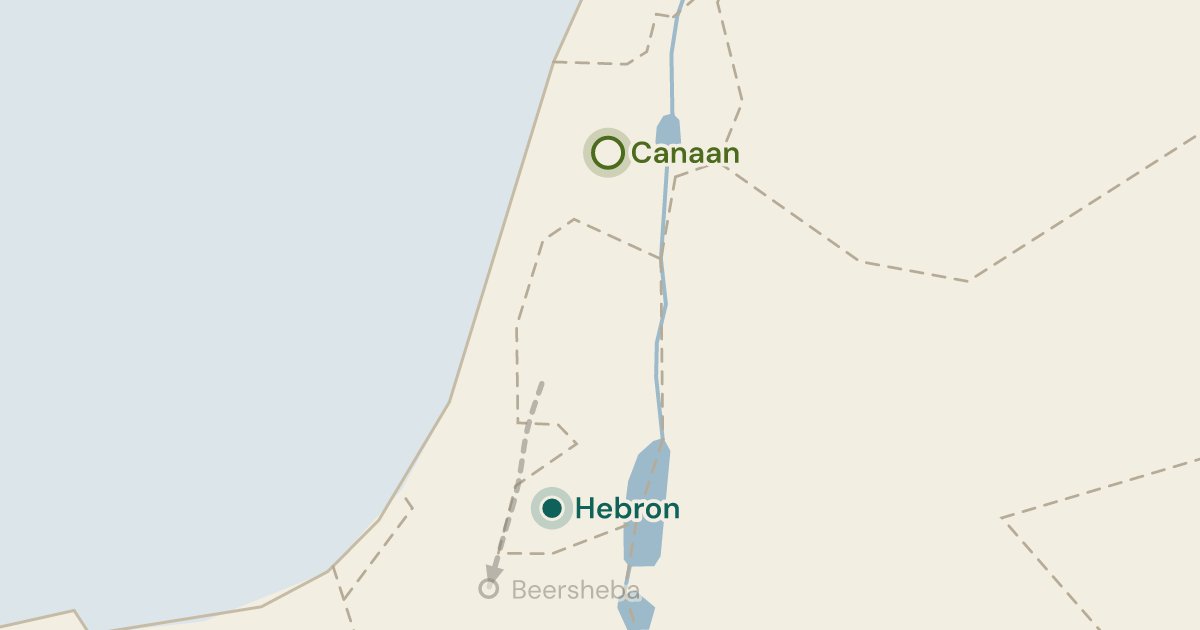
Genesis 23:2: The first death in the family, and the verse gives the town two names and a country
Read it →Commentary on Genesis 23:2
Genesis 23 moves from the mountain where Abraham offered Isaac to a graveside: Sarah dies in the land God had promised, and Abraham weeps for her. Two questions follow — how do faith and grief belong together, and why does her death come just here?
A death Scripture takes time over
Scripture records no other woman's age the way it records Sarah's, and a whole chapter follows her death. One writer notes that record, and what such sorrow does in a believing heart:
It is certain that Abraham's wife is the only woman whose years Scripture notes with care. The whole chapter tells of her death and the buying of a burying place… Faith does not weaken affection; it deepens our sense of the damage sin has done. But we do not grieve like others who have no hope, since we look for the coming of Him who is the Resurrection and the Life.
Faith and natural affection
Abraham came to Sarah's grave and wept. One writer answers those who think a believer should not cry:
In these scenes we see shining examples of the faith of God's elect in the face of death. We also learn that faith does not set aside natural affection. So we read, "Abraham went in to mourn for Sarah and to weep for her" (v. 2). Faith knows well that our loved ones who die in the Lord will rise again, and that for them death is gain. Even so, it is right that we mourn and feel their loss… But there is no word to say we are not to sorrow. No one could know the power of resurrection like the One who is Himself the resurrection and the life. Yet He wept at the grave of Lazarus.
Abraham in a new character
Here Abraham stands as a mourner, and his grief has a shape that other people's grief does not:
The chapter opens with the death of Sarah, and introduces Abraham in a new character — that of a mourner. The child of God must meet such things; but he must not meet them as others do. The great fact of resurrection comes in to relieve him, and gives his sorrow a character all its own. (1 Thessalonians 4:13-14)… The redemption of the soul secures the redemption of the body; the first we have, the second we wait for. (Romans 8:23)
Kiriath-arba, that is, Hebron
The verse names the place twice — first the old Canaanite name, then the name readers know:
The Canaanite name, meaning "city of Arba," of the city later called Hebron. Genesis 23:2; Genesis 35:27; Joshua 14:15; Judges 1:10; Nehemiah 11:25.
Dying in the land, owning none of it
Sarah dies in the land of Canaan. Yet Abraham owns no part of it, and must buy a grave to bury her:
Again, Hebrews 11 tells us plainly that these all (Sarah included) died, not in possession, but in faith. The scripture before us is the most striking witness of this. Until the burial of Sarah, Abraham did not own so much as a foot of ground. He remains a pilgrim and a stranger to the last. He has to buy even a burying place. He would have Canaan only under the glory of the Lord, and in the day of resurrection.
Why her death stands here
Some writers see more than family history in the timing of her death:
The death of Sarah follows, and God takes special notice of it. He does so not only for Abraham's sake, but, it would seem, for what her death pictures. It comes after the sacrifice and resurrection of the son, and before the call of the bride… Sarah stands for the covenant of promise held out to the Jew after the cross. On his unbelieving refusal it passes away, making room for the call of the church to heavenly glory and union with Christ on high.
Another writer applies the same picture to the nation, and adds that the grave is not the end of it:
She is a picture of the nation Israel, and her death in this chapter stands for the death of Israel as a nation… Israel, like Sarah, lies buried among the children of Heth, that is, the Gentiles. But Israel has the promise of restoration, pictured by resurrection. God has promised to open the national grave of Israel and bring them back to the land. He has given that land to the seed of Abraham forever.
Summary
- Counted — Sarah is the only woman whose years Scripture records, and a whole chapter covers her death and burial.
- Wept — faith does not set aside natural affection. Even the One who is the resurrection and the life wept at Lazarus's grave.
- Hoped — Abraham mourns, but resurrection gives his sorrow its own character: the soul redeemed now, the body still waited for.
- Landless — she dies inside the promised land, yet Abraham owns none of it. He must buy even a grave, and stays a stranger to the last.
- Pictured — commentators read her death as promise set aside for a season. It falls between the offering of the son and the calling of the bride, and restoration still lies ahead.