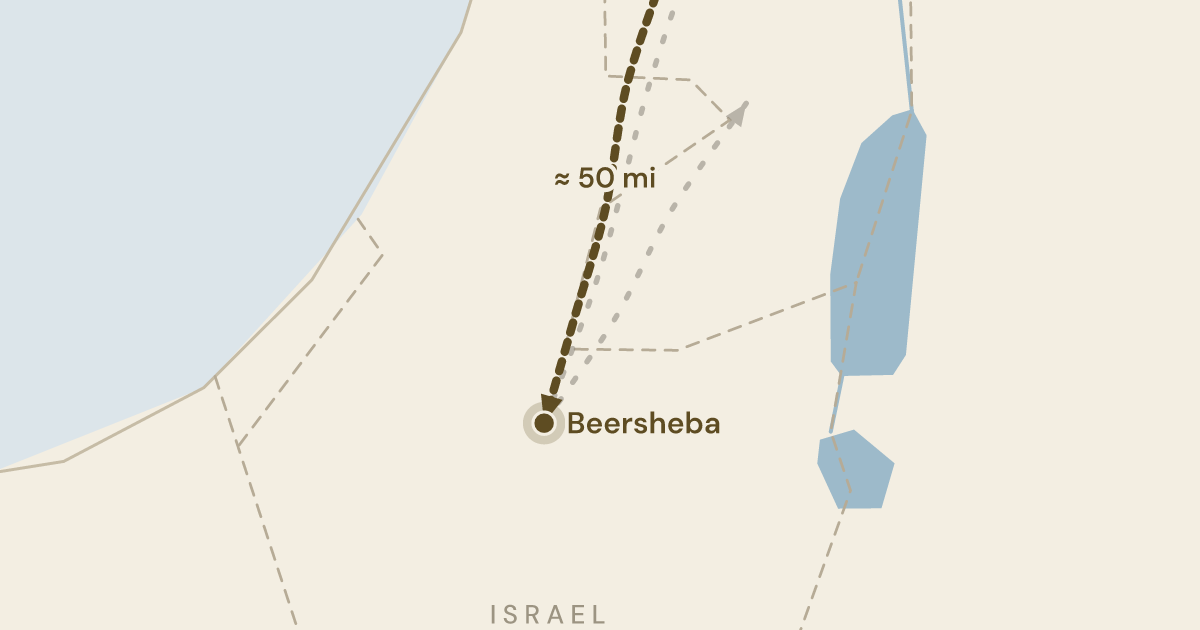
Genesis 22:19: The walk back, and the map has no honest place to start it
Read it →Commentary on Genesis 22:19
The trial on Moriah is over, and the chapter ends quietly: a walk down the hill, the waiting servants, a settled home. Yet the place Abraham returns to, and what he carries back, give this short verse its weight.
The Place He Came Back To
Abraham does not go somewhere new. He returns to a place already marked by an earlier oath. One writer asks whether that oath now made him think of a far greater one.
With all this accomplished, Abraham returned to Beersheba, and there he lived. That was the place of the oath between Abraham and Abimelech. Would he now link it in his mind with the far greater oath he had heard at Moriah?
The verse names only Abraham, though this writer reads Isaac as going home with him. The town's name carries the point. Beersheba means "well of the oath," and settling there pictures how a person lives once God has sworn.
Then Abraham, Isaac and the young men returned to Beersheba, where he was living. This is "the well of the oath," and so speaks of living in the calm confidence of the faithfulness of God's sworn promise.
An Oath God Had Never Sworn Before
God did more than repeat a promise on the mountain. He bound Himself in a way Scripture had never recorded before.
There is a lesson here in Abraham's steadfast endurance, and in God's gracious way with him on Mount Moriah. Isaac was released from the altar, and God provided a ram to be offered in his place. Once that day the angel of the Lord called out of heaven to Abraham, telling him to spare his son. A second time the angel's voice came. This time God not only spoke; He bound Himself by an oath to do what He said. Never before had God been said to swear.
A Son Received Back as From the Dead
He walks down the hill with the son he had already given up. One writer says this is the key to everything that follows.
Through all this trial of Abraham's we must not miss one thing: faith in resurrection cheered the father's heart. God's promises were secured in the son of whom He had said, "In Isaac shall your offspring be named." So if God called for him to be offered up, resurrection had to restore him from the very flames of the altar. And "in a figure," as the apostle says, Abraham received him back from the dead. Keep this figure of resurrection in mind. It matters, because the events that follow are pictures of Christ in resurrection.
Promises Now Resting on Resurrection
If everything now stands on resurrection ground, the promised blessing does not rest on Isaac himself.
Isaac is received back from the dead only "in a figure" (Heb. 11:19); Christ in reality. So the promises belong to Him. It is Christ raised from the dead who is the source of blessing to all the families of the earth.
Another writer sums up the ground everything now stands on.
All was taken up in resurrection, founded upon sacrifice to God.
What the Return Opens Up
One writer notices what happens next in Isaac's life, and what could not happen before it.
If we turn to this inspired account, we notice that Isaac had no bride until after that remarkable event in his history — he was offered up on the altar, and received back, in figure, from the dead. Until Isaac was in figure raised from the dead, we do not hear of the bride of Isaac. In our picture this is the foundation of all that follows.
Summary
- Oath. God bound Himself by an oath on Moriah. Scripture had never said that of Him before. Abraham then walks home to a town whose name means "well of the oath."
- Dwelling. Settling at the well of the oath pictures the calm confidence of a man resting on a promise God has sworn.
- Figure. Abraham comes down the hill with a son received back "in a figure" from the dead. Everything that follows stands on resurrection ground.
- Reality. What Isaac holds only in figure, Christ holds in reality. The promises belong to Him. Blessing for all the families of the earth flows from Christ raised.
- After. A bride comes into view only after Isaac has been on the altar and received back. The story moves on from where this verse leaves off.