Genesis 16:14: A well fixed by two landmarks, and the sources put it on top of one of them
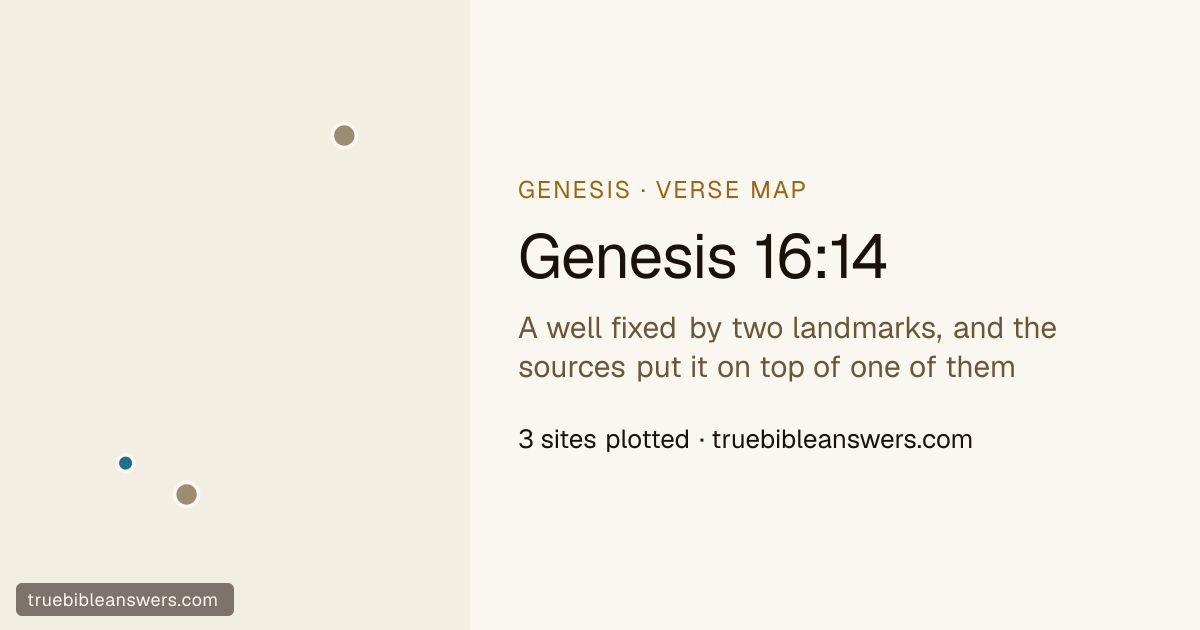
Read it →"Therefore the well was called Beer-lahai-roi; it lies between Kadesh and Bered." This is the only kind of sentence in Genesis that is written the way a map is: a place, and then two other places to find it by. The narrator does it because the well matters — Hagar names God here, the only person in the Bible who does, and Isaac is coming back from this well when he first sees Rebekah and settles at it again in the verse after his father is buried. The name is hers. "You are a God of seeing," she says, and the well is called the well of the Living One who sees me. She is a pregnant Egyptian slave who has run away, and she is the only woman on this map who names anything on it. What the map shows is that the fix does not quite work. The sources put Beer-lahai-roi at the spring of Ain Muweileh and Kadesh at Ain el-Qudeirat, and those two are six miles apart — near enough to see, and not what "between" is usually taken to mean. Bered is thirty miles the other way, at Haluza, on a quarter of the votes; the next candidate for it is a hill fifty miles further south, which would put the well north of both landmarks rather than between them. Six sources in the whole dataset have an opinion about the well at all. So the honest reading of this verse is that it was written for somebody who already knew the country. Kadesh and Bered were names you could steer by in the western Negev, and the well was somewhere in the triangle they make, and three thousand years later the triangle is all anyone has. The map draws it as it is — three dots that do not sit in a line — rather than moving one to make the sentence come out.
Regions on this map
Beer-lahai-roi, the well of the Living One who sees me — named by a runaway slave, and the only place in Genesis named by a woman. Isaac lives at it after Abraham is buried.
The well of the Living One who sees me, named by Hagar in the verse before this one. The sources are thin — 72 of 106 votes for the spring at Ain Muweileh, and nobody is confident — but the story keeps coming back: Isaac is on his way from here when he lifts his eyes and sees the camels, and here is where he settles once his father is in the ground.
Today: Ain Muweileh, western Negev
Kadesh and Bered, offered as landmarks to a reader who knew the western Negev. Kadesh is firm — 773 votes for Ain el-Qudeirat — and Bered is not, and neither of them ends up where "between" would want it.
On the map only because this verse uses it to fix the well, and it is not up to the job. 86 votes put it at Haluza, thirty miles north-east of the spring; 47 put it at Jebel Umm el-Bared, fifty miles south of Haluza, which would leave Beer-lahai-roi north of both landmarks instead of between them. It is named nowhere else in the Bible.
Today: Haluza, western Negev
The firmest point on this frame and the only one nobody argues about: 773 of its votes go to the spring at Ain el-Qudeirat, the largest oasis in the northern Sinai. It appears in Abraham's story three times and he arrives at it in none of them — the kings turn back north at it under its older name, Hagar's well is measured from it, and Abraham later lives "between Kadesh and Shur".
Today: Ain el-Qudeirat, northern Sinai
Genesis 16:14 in full
- Genesis 16:14Therefore the well was called ; it lies between and .