Genesis 14:7: Then they turned back, and came at the rebels from the south-west
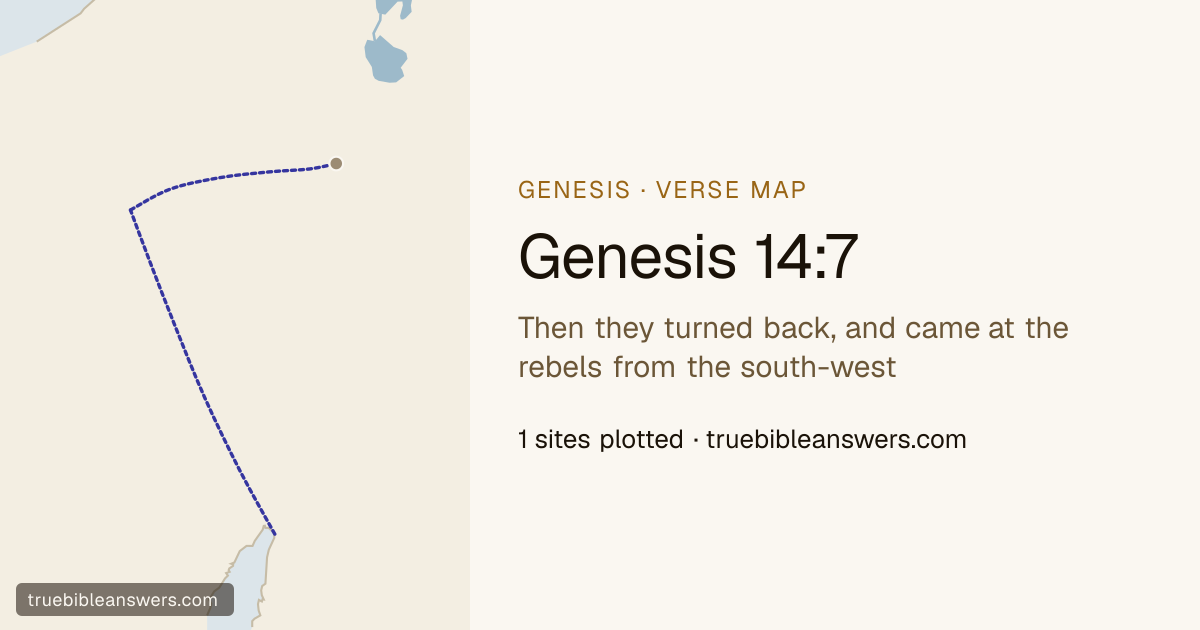
Read it →"Then they turned back and came to En-mishpat (that is, Kadesh) and defeated all the country of the Amalekites, and also the Amorites who were dwelling in Hazazon-tamar." This is the hinge of the campaign, and it is the verse that makes the whole itinerary look like something a general did rather than something a scribe invented. Three verses have brought the four kings down the eastern highway from Bashan to the Gulf of Aqaba, past the rebel cities and well beyond them. Now they turn. They cross the Arabah, strike north-west to the springs at Kadesh, and then come back east across the Negeb to Hazazon-tamar on the western shore of the Dead Sea — which puts them above the plain of the five cities, on the far side from the road they came down. The rebels are now surrounded by a campaign that has been all the way round them. En-mishpat means the spring of judgement, and the verse pauses to say the place is now called Kadesh: an oasis on the southern edge of Canaan, the largest water source for many miles, and the place Israel will camp at for a generation and be turned back from. Hazazon-tamar is identified in 2 Chronicles as En-gedi, the spring in the cliffs halfway up the western shore of the Dead Sea, where David later hides from Saul. The Amalekites are an anachronism the narrator does not apologise for: Amalek is Esau's grandson and is not born for two generations. Naming the country by the people who held it when the story was told is ordinary ancient practice, and Genesis does the same thing with the Canaanites in Genesis 12:6. The next verse is the battle.
Regions on this map
West across the Arabah to the springs at Kadesh, then back east over the Negeb to the cliffs above the Dead Sea. The four kings have now been all the way round the five cities they came to punish, and are standing north-west of them.
Two water sources, which is what decides where an army in this country can walk. Kadesh is the great oasis on the southern edge of Canaan; Hazazon-tamar is the spring halfway up the western shore of the Dead Sea that 2 Chronicles calls En-gedi.
The last place taken before the battle, and the only one on the western side of the Dead Sea. 2 Chronicles 20 identifies it flatly: "Hazazon-tamar (that is, Engedi)" — a freshwater spring bursting out of a cliff face above the salt, in country that is otherwise bare. David hides in its caves in 1 Samuel.
Today: En-gedi, on the western shore of the Dead Sea
En-mishpat, the spring of judgement, and the biggest oasis on the southern rim of Canaan. Hagar is found by a spring on the way to it in Genesis 16; Israel camps at it for most of a generation and is turned back from it in Numbers; Moses strikes the rock at it. Here it is a watering point on a campaign, four hundred years before any of that.
carried without a pin: the sources place Kadesh at more than one spring in the same wadi system
Genesis 14:7 in full
- Genesis 14:7Then they turned back and came to (that is, ) and defeated all the country of the Amalekites, and also the Amorites who were dwelling in .