Genesis 14:6: As far south as the road goes, and then the wilderness
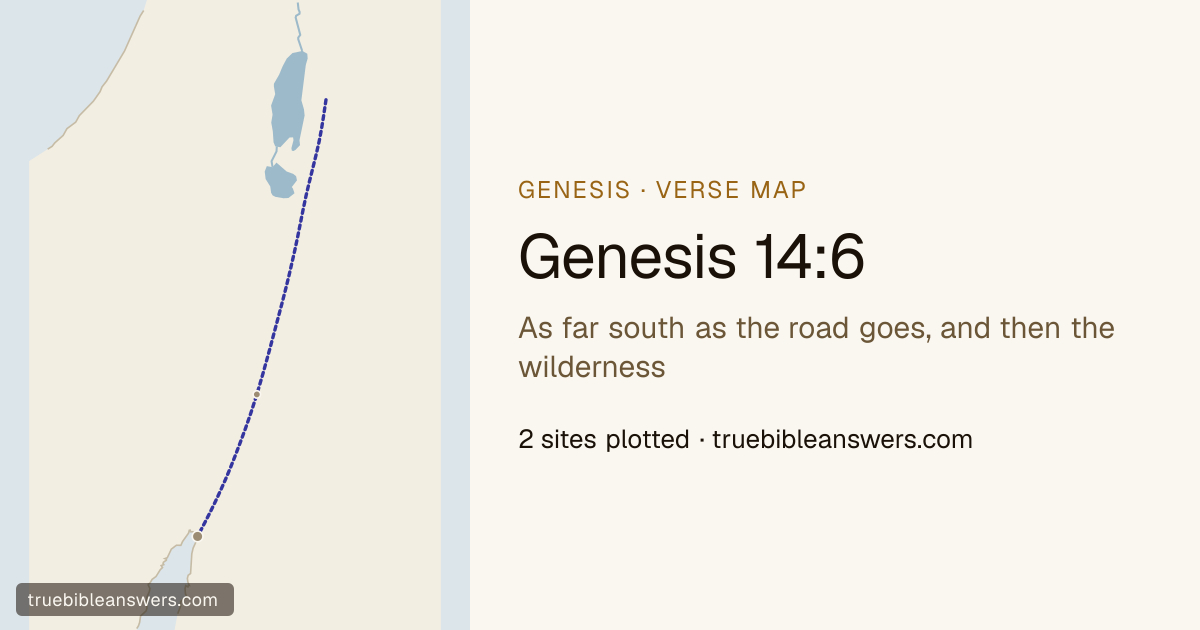
Read it →"And the Horites in their hill country of Seir as far as El-paran on the border of the wilderness." The campaign keeps going south, and this verse is where it runs out of country. Seir is the red sandstone mountain wall east and south of the Dead Sea, the highland that becomes Edom — steep, defensible, and inhabited in Genesis by the Horites, the people Esau's descendants later displace. El-paran is at the bottom of it, at the head of the Gulf of Aqaba, where the mountains stop and the desert of Paran begins. "On the border of the wilderness" is the verse's own way of saying: this is the end of the line. It is about a hundred and forty miles from the Moabite plateau of the previous verse to the gulf, and the road is the same one — the eastern highway, running along the spine of the highlands with the Arabah trench below it to the west. Taken with the verse before, this is the whole eastern flank of Canaan swept in two sentences, from Bashan in the north to the Red Sea in the south, roughly three hundred miles of it. The next verse turns the army round. It has cleared everything behind and beside the five rebel cities, and only now does it come back north-west, through Kadesh and up to the edge of the Dead Sea plain, to fight the war it came for. Whoever composed this chapter understood how an army moves. Neither place is somewhere Abraham goes. Seir belongs to Esau's story and Paran to Ishmael's — Genesis 21 leaves Hagar's son living in the wilderness of Paran, which is the same desert this verse stops at the edge of.
Regions on this map
A hundred and forty miles along the top of the Edomite escarpment, with the Arabah trench below to the west, ending where the mountains do. Two verses have now swept the whole eastern flank of Canaan, Bashan to the Red Sea.
Ground that belongs to other people's stories. Seir becomes Edom and is Esau's; the wilderness of Paran is where Genesis 21 leaves Ishmael living. Abraham himself never goes to either.
The southern limit of the campaign, at the head of the Gulf of Aqaba where the highlands end and the desert of Paran opens out. The verse's phrase for it — "on the border of the wilderness" — is a description of the country rather than a name, and it is the furthest south anything in Genesis 14 goes.
Today: near Elath, at the head of the Gulf of Aqaba
The red sandstone highland running south from the Dead Sea, rising to over five thousand feet and falling away west into the Arabah. Its people here are the Horites, whom Deuteronomy says the sons of Esau destroyed and dispossessed; after that the mountain is Edom's, and "Seir" and "Edom" become the same word in the prophets.
Today: the mountains of Edom, southern Jordan (representative point)
Genesis 14:6 in full
- Genesis 14:6and the Horites in their hill country of as far as on the border of the wilderness.