Genesis 14:18: The first time Jerusalem appears in the Bible, under a shorter name
Read it →Commentary on Genesis 14:18
Two kings come out to meet Abram after his rescue of Lot, and God arranges for the stranger to arrive first. This stranger is a king and a priest at once, and he comes with bread and wine.
A king who is also a priest
The weight of the verse rests on two titles held by one man. Who else in Scripture is both king and priest?
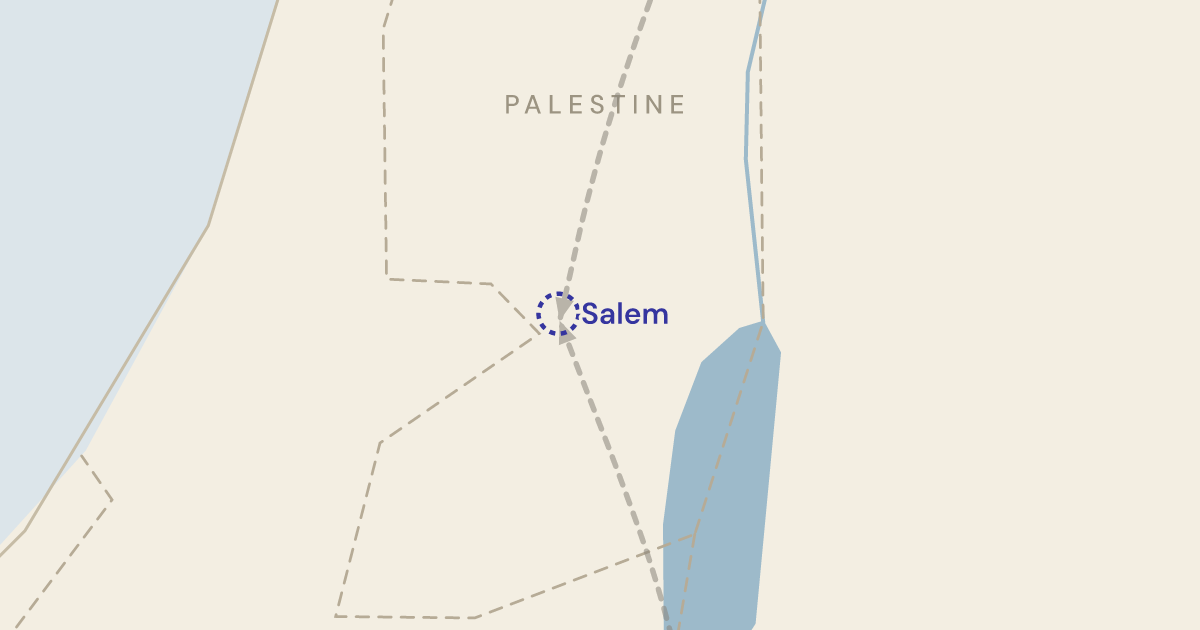
He was a real man, not an imaginary figure — a man like any of us, but a king and a priest together. Melchizedek was priest of the Most High God, and both Testaments describe him that way (Gen. 14:18; Heb. 7:1). God owned him as a priest. He was also King of Salem — the city we believe was later known as Jerusalem. So he held both offices in himself, which is true of no one else but the Lord Jesus Christ. The parallel goes further, since the writer of Hebrews notes that we are told nothing about this mysterious man's parents, family line, birth, or death: he has "neither beginning of days nor end of life, but resembling the Son of God he continues a priest forever" (Heb. 7:3).
Righteousness before peace
Hebrews translates both his name and the name of his city. The order matters.
First his name is Melchizedek, that is, "King of righteousness." Then he is "King of Salem," that is, "King of Peace." That order is always a principle in God's ways. In the millennium righteousness must first have its way before peace can come in... This is of course as true for the present as for the future, and fulfilled in the gospel in a far more wondrous way. As the effect of righteousness by the Cross peace has come to us, and our Melchizedek has indeed made good His name.
The name of God he serves
Melchizedek serves God under a particular name: "God Most High." That name says something about who God is.
But above all he was priest of the Most High God. This is the name of God as supreme Governor of all things, and Genesis adds: Possessor of heaven and earth... In Abraham's walk of faith, the name of God for him was "The Almighty." But here Abraham has won a victory over the kings of the earth. So Melchizedek, the king of righteousness, blesses him in connection with God as Possessor of heaven and earth, the Most High. This looks onward to the royalty of Christ, a Priest upon His throne, when by the will and the power of God He shall have triumphed over all His enemies.
What bread and wine are — and are not
Did he offer the bread and wine to God as a sacrifice? William Kelly says no, and points to what the scene lacks.
The priesthood here is clearly unlike any other. Melchizedek offers no sacrifice, and there is no intercession either. He brings out bread and wine for man, without a word of sprinkling blood before God.
The two elements carry their plain, everyday use: one feeds, the other gladdens.
Melchizedek, King of Salem (King of righteousness, King of peace) appears with bread, which speaks of the food that keeps life going. He also brings wine, which speaks of joy (Psalm 104:15). He came on the scene as "priest of God Most High," "Possessor of heaven and earth."
Why he came at that exact moment
He did not appear during the battle. He appeared in the gap between Abram's victory and the king of Sodom's offer.
This stranger, commissioned by God, was on his way to fortify Abram's heart at the very moment when the enemy was on his way to attack... The enemy was about to hold out his shiny bait in front of the man of God. So Melchizedek is on hand to set the realities of God's kingdom before his eyes. He was about to feed and strengthen Abram's soul with the "bread" of the kingdom, and cheer him with its "wine," so that in the strength of that food he might rise above every attraction the world could offer.
So his ministry looks both ways: back over the fight just won, and on to the one about to begin.
The "bread and wine" refreshed Abraham's spirit after his fight with Chedorlaomer, the king he had just beaten. The blessing prepared his heart for his next fight, with the king of Sodom. Abraham had just conquered, and yet he was about to fight again. The royal priest refreshed the conqueror's spirit and strengthened the fighter's heart.
Summary
- Two crowns. King and priest meet in one man here — a pairing Scripture gives to no one else but Christ.
- Two names. Righteousness comes first, then peace: his name before his city, and the cross before our peace.
- Two hands. He brings bread and wine to a man, not a sacrifice to God — no blood and no intercession in this scene.
- Two conflicts. The bread and wine refresh the soldier coming out of battle. The blessing arms him for the temptation walking toward him.
- Two possessions. He names God "Most High, possessor of heaven and earth" Faith holds that title now. Christ will display it when He reigns as Priest upon His throne.