Genesis 14:17: Two kings come out to meet him, and the map only knows where one of them is going
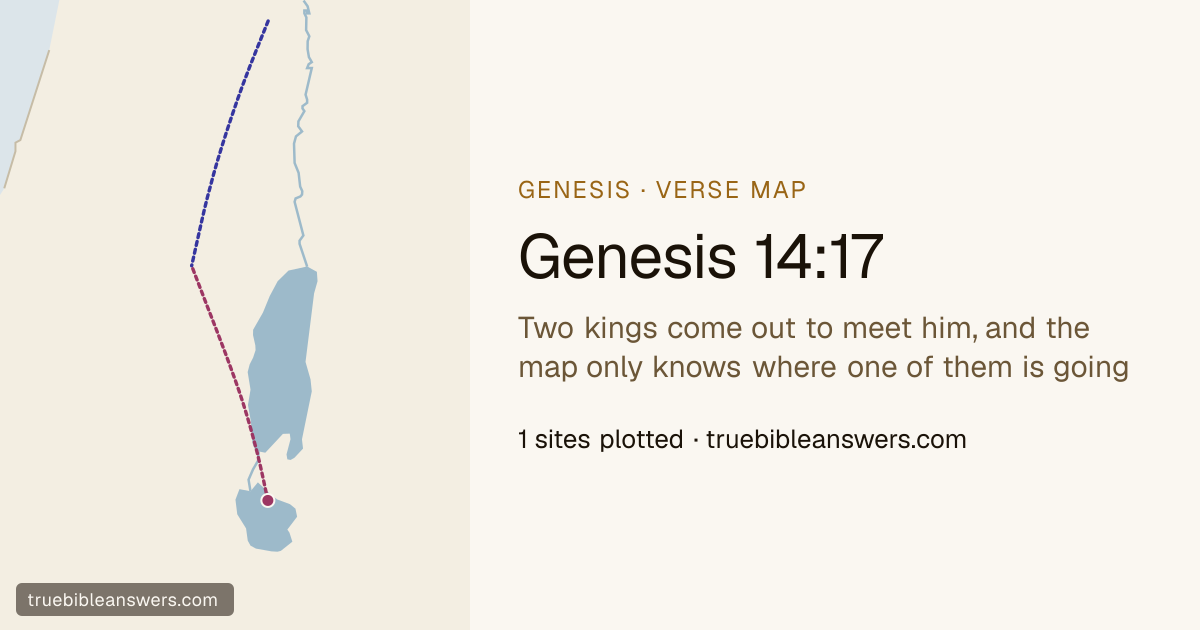
Read it →"After his return from the defeat of Chedorlaomer and the kings who were with him, the king of Sodom went out to meet him at the Valley of Shaveh (that is, the King's Valley)." The war is over and the interesting part of the chapter begins. Abram is coming back south with the prisoners and the plunder; the king of Sodom, whose city he has just emptied of an occupying army, comes up out of the rift to meet him. The meeting place is named twice in one clause — the Valley of Shaveh, and then, for a reader who does not know the older name, the King's Valley. Where it is has never been settled, but the tradition is old and consistent: a valley just outside Jerusalem, most often the broad head of the Kidron below the eastern slope of the city. 2 Samuel 18 puts Absalom's monument there — "in the King's Valley, for he said, I have no son to keep my name in remembrance" — and Josephus places it a quarter of a mile from the city. The map shows what the sources actually give: two rings, four hundred metres apart, for two names the verse says are the same place. That gap is not a disagreement worth resolving. It is the visible width of a scholarly consensus that this is one valley near Jerusalem and nobody can put a spade in it. Two lines converge on it: Abram coming down out of the north with everything he has recovered, and the king of Sodom coming up thirty miles from the plain with nothing. What happens next is the strangest scene in Genesis — a priest-king with no genealogy appears with bread and wine, blesses Abram, and takes a tenth of everything; and then the king of Sodom offers Abram the goods and Abram refuses to take a thread or a sandal strap from him.
Regions on this map
Coming back down the country from Damascus with the prisoners and the goods. The meeting happens on the ridge above the rift, not down in the plain — the king of Sodom has to come up to him.
The valley's other and better-known name, and the one 2 Samuel uses when Absalom sets up his pillar in it: "for he said, I have no son to keep my name in remembrance." Tradition and Josephus both put it just outside Jerusalem, most often at the broad head of the Kidron below the eastern slope of the city.
no fixed site; the sources agree on the neighbourhood and not on the spot
The older name, used once in the Bible and glossed immediately — "that is, the King's Valley" — which is how the narrator handles a name his readers will not recognise. The sources put it about four hundred metres from the point they give the King's Valley, which is a measure of how little anyone knows rather than a claim that they are different places.
no fixed site; the verse itself equates it with the King's Valley
Thirty miles up out of the rift, from a city that has just been sacked and emptied, to meet the man who has recovered everything in it — and, in the verses that follow, to offer him the goods and be refused.
Not travelled to in this verse but travelled from: its king comes up out of the plain to meet Abram on the ridge. The city has just been plundered and its people carried off, and Abram has brought them back. Where it stood is unknown; the sources put it at the south end of the Dead Sea.
Today: unidentified; sited at the south end of the Dead Sea (representative point)
Genesis 14:17 in full
- Genesis 14:17After his return from the defeat of Chedorlaomer and the kings who were with him, the king of went out to meet him at the (that is, the ).