When they came to the threshing floor of Atad, which is beyond the Jordan, they lamented there with a very great and grievous lamentation, and he made a mourning for his father seven days.
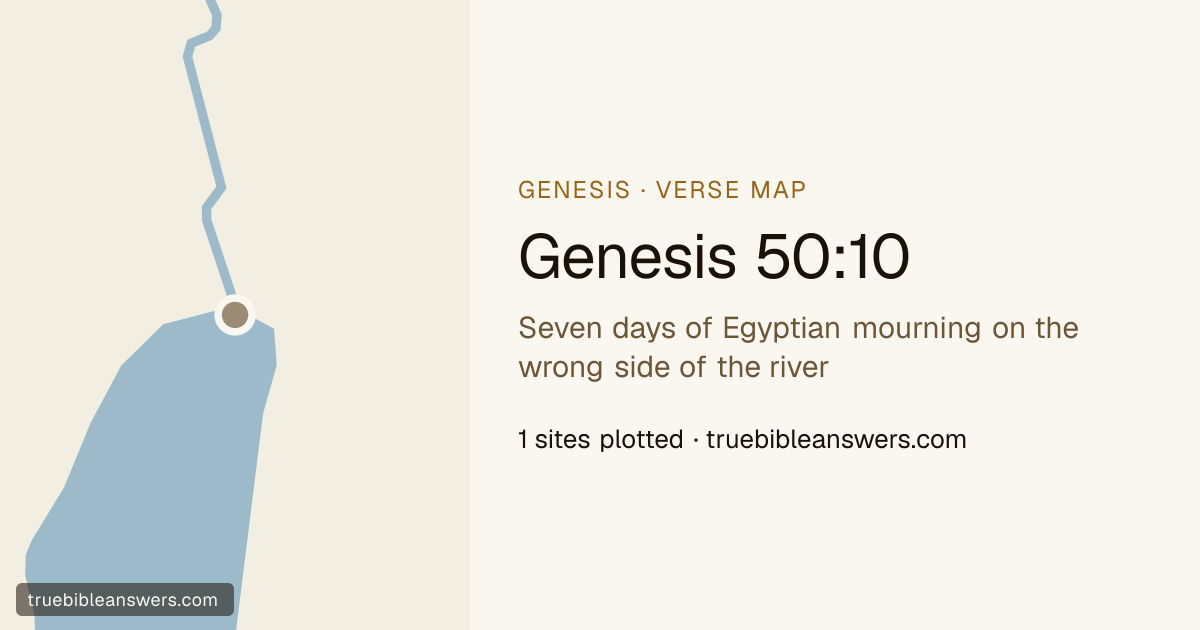 Open map →Seven days of Egyptian mourning on the wrong side of the riverGenesis 50:10 · 1 place plotted
The last chapter of Genesis carries Jacob's body out of Egypt. On the way the whole procession stops at a threshing floor called Atad, and mourns there seven days. Why the long pause? Why so vast a show of grief? And what did the Canaanites who watched make of it?
The Place and Its Name
Atad is not a settled town but a working floor, and the mourning held there gave the spot a new name. A Bible dictionary notes that the Hebrew allows two readings, and that the surrounding verses settle which one fits:
Morrish Bible DictionaryWith the Hebrew vowel points, this name means "meadow of the Egyptians." Read without them, or with different points, it means "mourning of the Egyptians." The context in Genesis 50:11 shows that "mourning" is part of the name. It was the threshing floor of Atad, "beyond the Jordan." That seems to place the seven days' mourning east of the Jordan. If so, the mourning came before they carried the body into Canaan for burial. But some hold that Moses by "beyond the Jordan" means the west, because he was standing on the east side. The people of the land are called Canaanites, which also points to the west. Jerome uses a similar phrase, "across the Jordan," and then says that Atad, the same place, lay between the Jordan and Jericho. The site has not been identified.
What Happens on a Threshing Floor
A threshing floor exists for one purpose. One writer reads the grief held there in the light of it:
L. M. GrantComing to the threshing floor of Atad, the company mourned deeply for seven days (v. 10). On the threshing floor the chaff is separated from the grain. It speaks of blessing that comes out of suffering. It pictures the nation Israel blessed at last through the tribulation (the threshing).
Weeping With Those Who Weep
Scripture sets this week of weeping beside other scenes like it:
The Bible TreasuryIt is a divine command to "weep with those who weep," and examples are not lacking in the history Scripture gives. The household of Joseph and his brothers mourned for the death of Jacob with a "very great and grievous lamentation" at Abel-mizraim (Gen. 50:10-11). Job's three friends wept aloud for him in his sorrow. They tore their robes and sprinkled dust on their heads. Then they sat with him in silence for seven days (Job 2). Jeremiah lamented the death of King Josiah (2 Chron. 35:25).
Why the Funeral Was So Magnificent
Why such a grand funeral? One writer explains the splendour as a promise made visible, and draws a sharp conclusion for today:
J. G. BellettSo it was with funerals, as well as with worship. In earlier days they were meant to be magnificent, because resurrection was then only in prospect. Funerals then were a pledge of the resurrection they expected. It was fitting that the pledge should be splendid, matching the glory of what it pledged. But now resurrection has become fact in the person of the Lord Jesus, the Son of God. So the grand funeral, like ceremonious worship, is more of a reproach. It is as though the great mystery itself had not yet become real in its substance and power. For it is not funeral pomp that is now the pledge of our coming resurrection; the resurrection of the Lord is that, the firstfruits of a promised harvest.
A Grave That Said "Stranger"
Egypt paid these honours because of Joseph's rank. But the place of burial told another story:
F. B. HoleThey were in Egypt, so they kept the burial customs of that land up to a point. But Jacob's body was not to lie embalmed in an Egyptian tomb. Jacob wanted it to lie in the land of promise, and so did Joseph. God's promise was real to their faith. Jacob's funeral bore witness to the extraordinary position of power and influence Joseph had reached. Pharaoh gave permission without hesitation. All Jacob's sons joined Joseph in it, along with many important people of Egypt. Canaan recognised it as a great mourning of the Egyptians. Even so, they laid his body in the grave that testified these men of faith were still strangers and pilgrims.
The Difference Christ Makes
The onlookers saw only overwhelming grief. Believers now stand somewhere else entirely:
William KellyGenesis 49 ends with Jacob's death. The closing chapter (Gen. 50) tells us of his sons carrying him to the field of Machpelah in Canaan, where his fathers lay buried. It was a grievous mourning in the eyes of the people of the land. What a difference for those who know Christ glorified in heaven! Those who are "not of the world" depart to be with Him.
Summary
- Place. Atad was a threshing floor "beyond the Jordan," named after the mourning held there. Commentators differ over which side of the river it lay on. No one has identified the site.
- Pledge. Grand funerals belonged to an age when resurrection was still only promised. The splendour matched the glory it stood for.
- Grief. Seven days of loud lament is no failure of faith. Scripture commands us to weep with those who weep. It records the same sorrow in Job's friends and in Jeremiah.
- Pilgrimage. Egypt supplied the honours. But the body went to Machpelah, to a grave that marked these men as strangers and pilgrims.
- Hope. The threshing floor pictures blessing that comes through suffering. Christ is now glorified, and those who leave this world depart to be with Him.