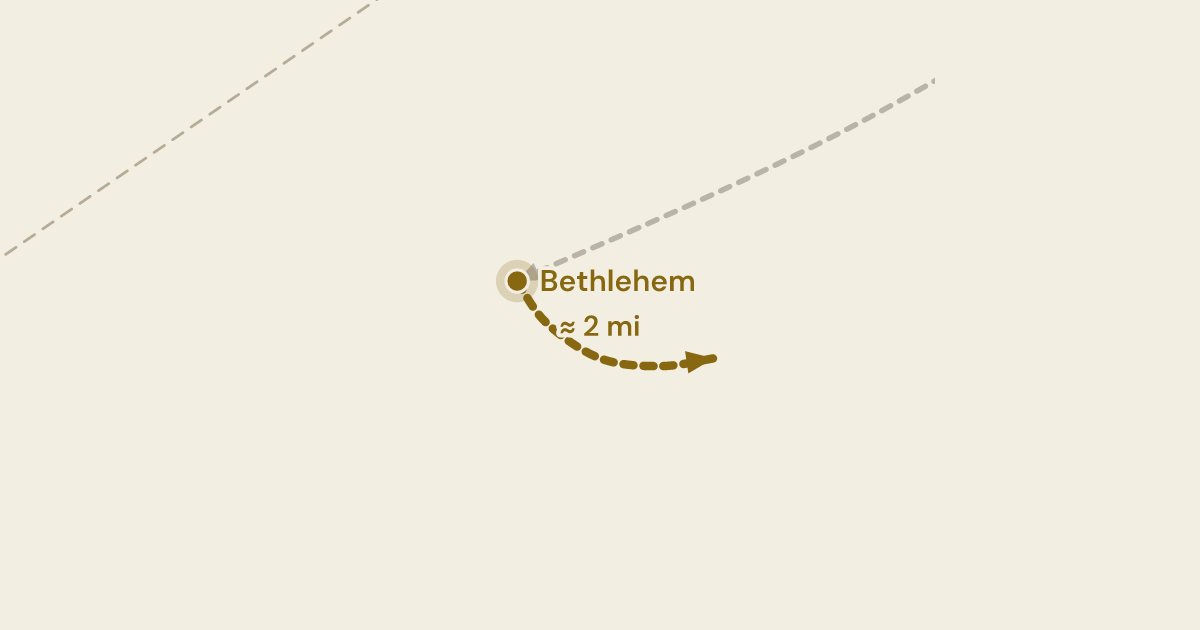
Ruth 2:4: Boaz walks out from the town to his barley, and finds a Moabite gleaning in it
Read it →Commentary on Ruth 2:4
Harvest time in Bethlehem, and the owner of the field walks out to meet his workers. Only a greeting passes between them — yet it shows the mark of a good master, the first need of every worker for God, and a picture of the One Boaz stands for.
The man who arrives
Boaz was a wealthy man. One writer begins there — with what money did to his character.
Boaz was a godly man of substance and standing in Bethlehem, whose riches strengthened his moral and spiritual character instead of spoiling it. He was courteous, considerate, and generous to the poor. His recorded words and actions both show his deep-rooted faith in God. There lay the secret of his strength.
Greeting and answer
The blessing runs both ways. He speaks first, and they answer.
As he enters the field he says to his reapers, "The LORD be with you." "The LORD bless you," they reply. What beautiful greetings between master and servants. Boaz was a good master. There were no strikes among his workmen. Nobody put their heads together to grumble about long hours, hard work, or low wages. He greets his servants kindly and they answer him with blessing. There is nothing but good feeling and agreement between them. Oh, Christ is a blessed Master! "My yoke is easy," He says, "and my burden is light."
The meaning of the name
The name Boaz has a meaning of its own. One writer takes it as the key to the person Boaz pictures.
His name, "in him is strength," reminds us at once of the One of whom he is the type. He is "a mighty man of wealth," or valour, as the word more naturally means. He reached His place as the Lord of the harvest and the generous Giver through the conflict in which He was the Victor over the "strong man." He reached the place of wealth by the path of poverty. He laid aside the riches that were His by right, so that He might have joined to Himself those objects of His love and grace.
The first need of every servant
Of all he could have said to men already at work, Boaz asked for God's presence with them.
The first necessity for every servant of the Lord is the presence of the Lord. So we find Boaz greeting his reapers with the beautiful desire "The LORD be with you" (v. 4). And in the same spirit we read in the gospel day, "And they went out and preached everywhere, while the Lord worked with them" (Mark 16:20).
Freedom between master and servant
The greeting is short, but one writer sees more in it than politeness.
Now notice the closeness between the master and the servants. It is beautiful; there is perfect communion between the Lord and the reapers, and it is most blessed to see the way He comes in and out among them.
Rare then, rare now
Set against ordinary working life, the scene stands out — and that rarity has a cause and a cure.
The relation between Boaz and his reapers is all too rare in a world where selfishness in the master and suspicion in the servant are the rule. This must always be the case where men leave God out. The gulf between "labour and capital" will only widen until the reign of grace takes hold in the hearts of men. How useless are labour laws and efforts for universal prosperity, when they never reach the root of the evil — the sin and selfishness of man's heart. Nothing will reach it until He comes, of whom Boaz is the type.
A pattern for anyone in charge
The verse is not only for the future. One writer applies it to employers today.
Employers may not think of this, but they ought to serve their servants. That does not mean being subject to them. It means caring about their proper welfare and treating them kindly and fairly. Consider the character of Boaz in Ruth 2:4. His relationship with his servants was excellent, for he first recognised his Master in heaven.
Summary
- The Master comes. Boaz walks into his own harvest field and speaks first. His wealth strengthened his character instead of spoiling it, and his words show where his strength came from.
- The Master's name. "In him is strength" points to the Lord of the harvest. He reached His place of wealth by the path of poverty, so He could join others to Himself.
- The Master's gift. He asks God's presence for his workers. That is the first need of every servant of the Lord — as the disciples preached everywhere, and the Lord worked with them.
- The Master's household. Blessing goes out and blessing comes back. Nothing but good feeling stands between master and servants — a picture of the Lord moving among those who work for Him.
- The Master's reach. Such harmony is rare where men leave God out, and no law reaches the selfishness that spoils it. Anyone in charge today can start where Boaz started: by recognising a Master in heaven.