Genesis 26:23: Seven words, and the end of the Philistine years
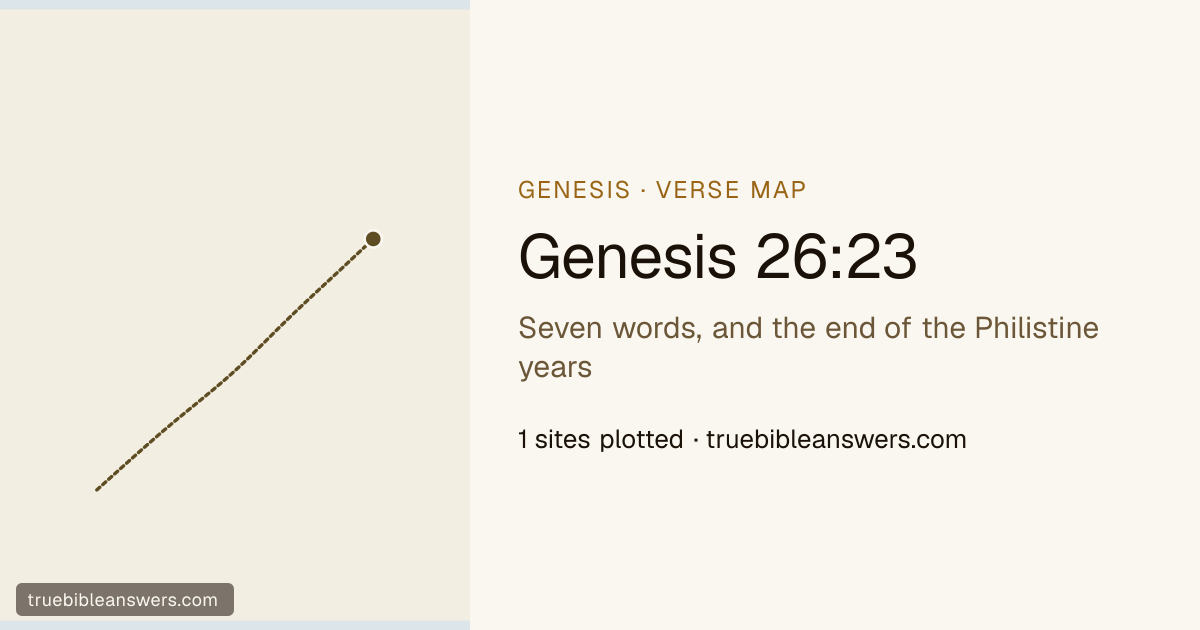
Read it →"From there he went up to Beersheba." Seven words, no reason given, and the chapter changes direction. Everything from the famine onwards has been Isaac moving further out — out of the Negev to Gerar, out of Gerar to the wadi, down the wadi and then twenty-five miles into the dry country for a well nobody would follow him to. This verse turns him round and takes him back north-east, out of Philistine reach altogether, onto ground his father held. "Went up" is literal. Ruheibeh sits in open desert; Beersheba stands where two wadis meet at the northern edge of the Negev, about seven hundred feet higher and a day and a half's walk. The road runs up the Beersheba basin with the hills on the right the whole way. He is going home in a sense that matters. Abraham dug a well here, swore an oath over it with a king called Abimelech, planted a tamarisk and called on the name of the LORD, and lived here longer than anywhere else; Hagar was sent into the wilderness that carries the town's name; the walk to Moriah started from here and came back to it. Isaac was very likely a boy in this place. He is now a rich man with flocks and a grown reputation, coming back to it after being told to go away. The town is the one place in the chapter with a real archaeological argument behind it and two candidates worth naming: 382 of its votes go to the tell at Tel Be'er Sheva, at the junction of the Hebron and Beersheba wadis, and 162 to the wells at Bir es-Seba three miles west under the modern city. The map pins the tell and says so on the card; at the width of this frame the two are the same dot. What happens the night he arrives is the only time God speaks to Isaac in his own right, and the altar he builds the next morning is the only altar he builds.
Regions on this map
The turn. Four moves running have taken him further out; this one takes him back, out of Philistine country and onto the ground his father lived on longest, seven hundred feet up from the well he had just dug.
His father's town, where two wadis meet at the top of the Negev. Abraham dug a well here and swore an oath over it with a king of this same name, planted a tamarisk, and set out for Moriah from it; Hagar was sent into the wilderness that carries its name. 382 of its 544 votes are for the tell at Tel Be'er Sheva and 162 for the wells at Bir es-Seba three miles west. Isaac arrives, is spoken to that night, and builds the only altar of his life the next day.
Today: Tel Be'er Sheva, Israel
Genesis 26:23 in full
- Genesis 26:23From there he went up to .