Genesis 26:22: The third well, named for nobody coming
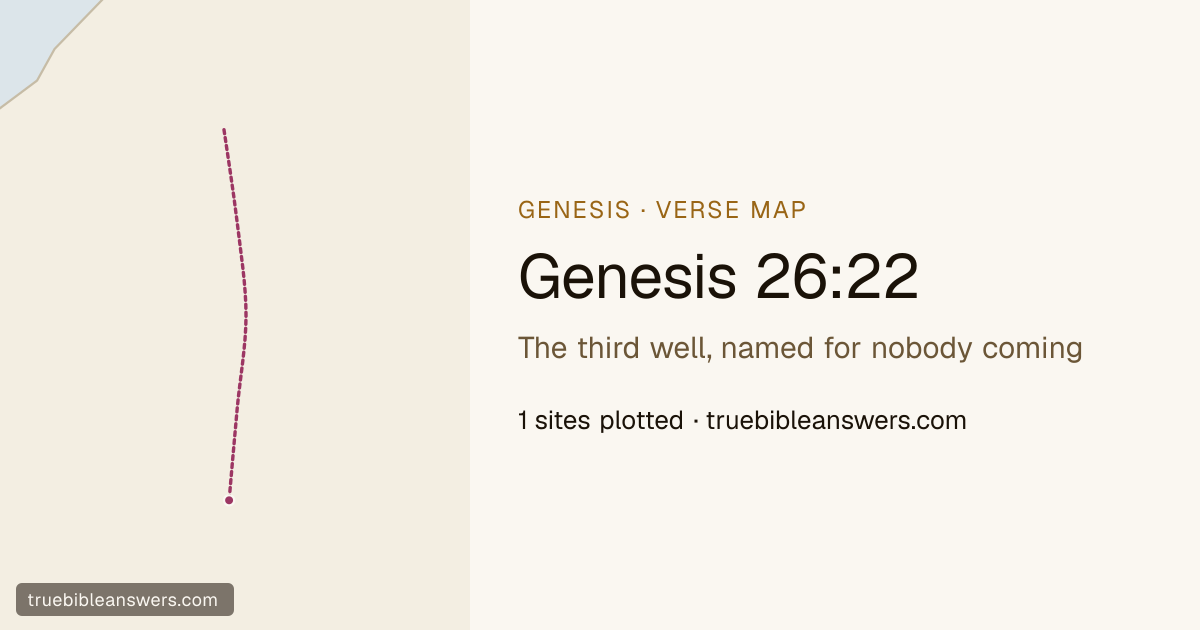
Read it →"And he moved from there and dug another well, and they did not quarrel over it. So he called its name Rehoboth, saying, 'For now the LORD has made room for us, and we shall be fruitful in the land.'" The third hole in the ground in five verses, and the first one nobody takes off him. Rehoboth means broad places, room — and the sentence he says over it is the only line of Isaac's own speech in the whole chapter that is not a lie about his wife or a negotiation with a king. Now the LORD has made room for us. What made the room was distance. This is the one well in the run the sources are reasonably sure of: 391 of its votes, and no serious rival, put it at Ruheibeh, a large ruin with wells in the open Negev about twenty-five miles south-east of the Gerar valley. That is a long way out. He has not found better water; he has found water far enough from Abimelech's herdsmen that they do not come. The story reads as a promise kept and the map reads as a retreat, and both are true at once. The name is why the site is as firm as it is, and it is worth being honest about the circularity: Ruheibeh preserves the sound of Rehoboth, and the strongest argument for the identification is that argument and no other. The excavations there are Byzantine and Nabataean, centuries after anybody in this chapter. Genesis 26:21 is where that gets awkward — the leading reading for Sitnah puts it seven hundred metres from this dot, and this verse has him move away from Sitnah to get here. The line on the map starts in the wadi rather than at Sitnah, because Sitnah has no agreed site to leave from. It is the move Genesis describes with three words: he moved from there. He does not stay. The next verse takes him back north, out of Philistine reach altogether, to his father's town.
Regions on this map
Room. The third well and the first nobody claims, twenty-five miles out into the Negev — far enough from Gerar that its herdsmen do not bother to come. A promise kept, and a retreat, drawn as the same line.
Broad places, room to spread out. 391 votes and no real rival put it at Ruheibeh in the open Negev, a large ruin with wells about twenty-five miles south-east of the Gerar valley — and the whole case for the site is that the modern name preserves the old one, since what has been dug there is Byzantine and Nabataean. It is the firmest of Isaac's three wells and the only one the text says nobody fought him for.
Today: Ruheibeh, in the Negev
Genesis 26:22 in full
- Genesis 26:22And he moved from there and dug another well, and they did not quarrel over it. So he called its name , saying, “For now the LORD has made room for us, and we shall be fruitful in the land.”