Genesis 26:17: Asked to leave a town, and moving as far as the wadi below it
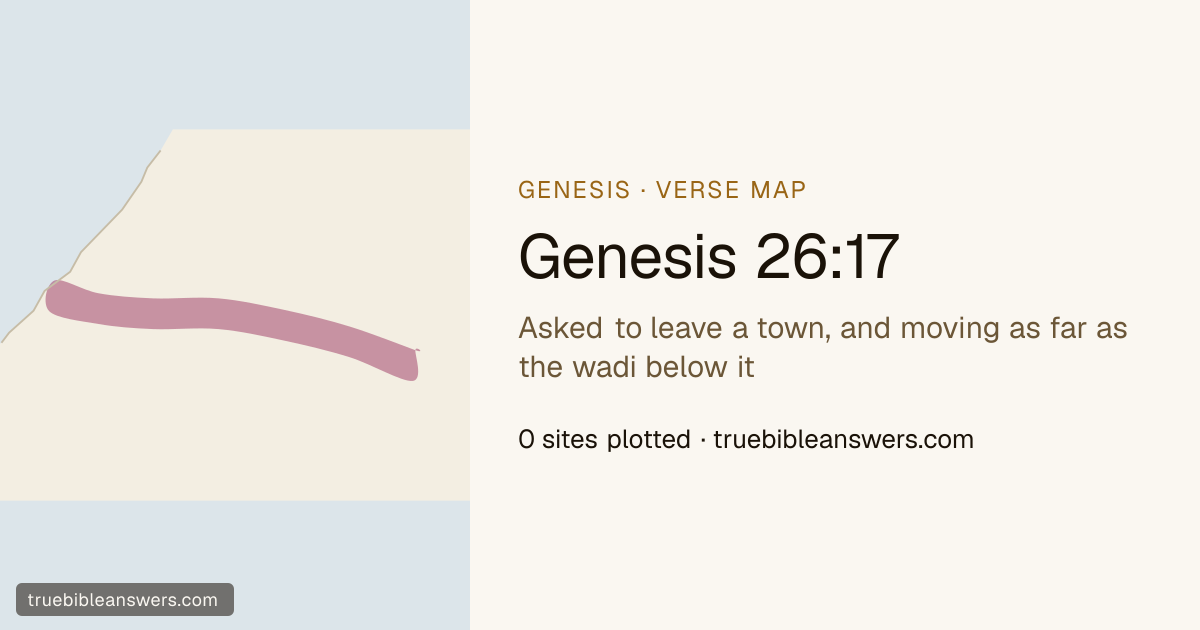
Read it →"So Isaac departed from there and encamped in the Valley of Gerar and settled there." He has been asked to go. Isaac sowed in a famine year and reaped a hundredfold, the flocks multiplied, the Philistines envied him, and Abimelech said the quietest eviction in scripture: go away from us, for you are much mightier than we. So he goes — about as far as a man can go while still being in the same place. The Valley of Gerar is the wadi the town stands over. Today it is the Nahal Gerar, a dry bed for most of the year that runs west from the hills above Beersheba, past the mound at Tel Haror, and on to join the Besor before the sea. Moving from the town into the valley is a move of a mile or two and a change of status: out of the settlement and into the open ground below it, where the water is under the sand and the wells are. The sources cannot fix the valley on its own. Every identification of it resolves to whichever mound that source proposes for Gerar itself — four of them, spread over about fifteen miles of the same wadi — which is a way of saying that the valley is known only by the town, and the town is what is being argued about. So it carries a ring rather than a pin, at the leading mound, and the wadi is drawn as ground because the wadi is what the verse is about. Everything that follows happens along this line. Three wells in the next five verses, two of them fought over and one of them not, and then the ground runs out and he goes up to Beersheba. The map of Genesis 26 is really the map of this watercourse.
Regions on this map
The wadi below the town: a dry bed most of the year, running west from the hills above Beersheba to the Besor. Being told to leave Gerar means moving down into it, and every well in the rest of the chapter is dug along its length.
The watercourse the town stands over, and the ground Isaac is pushed out into when Abimelech tells him to go. It is the Nahal Gerar, dry most of the year, with water under the bed — which is why the next five verses are about digging. No source fixes the valley in its own right: every identification of it resolves to that source's own candidate for Gerar, four mounds spread along fifteen miles of the same wadi, so the valley is known only by the town and the town is the thing in dispute.
no point of its own; every identification resolves the valley to whichever mound that source proposes for Gerar, and the ring is at the leading one. The outline is editorial and follows the Nahal Gerar's bed
Genesis 26:17 in full
- Genesis 26:17So Isaac departed from there and encamped in the and settled there.