Genesis 26:1: The second famine, and a son taking the same road for the second time
Read it →Commentary on Genesis 26:1
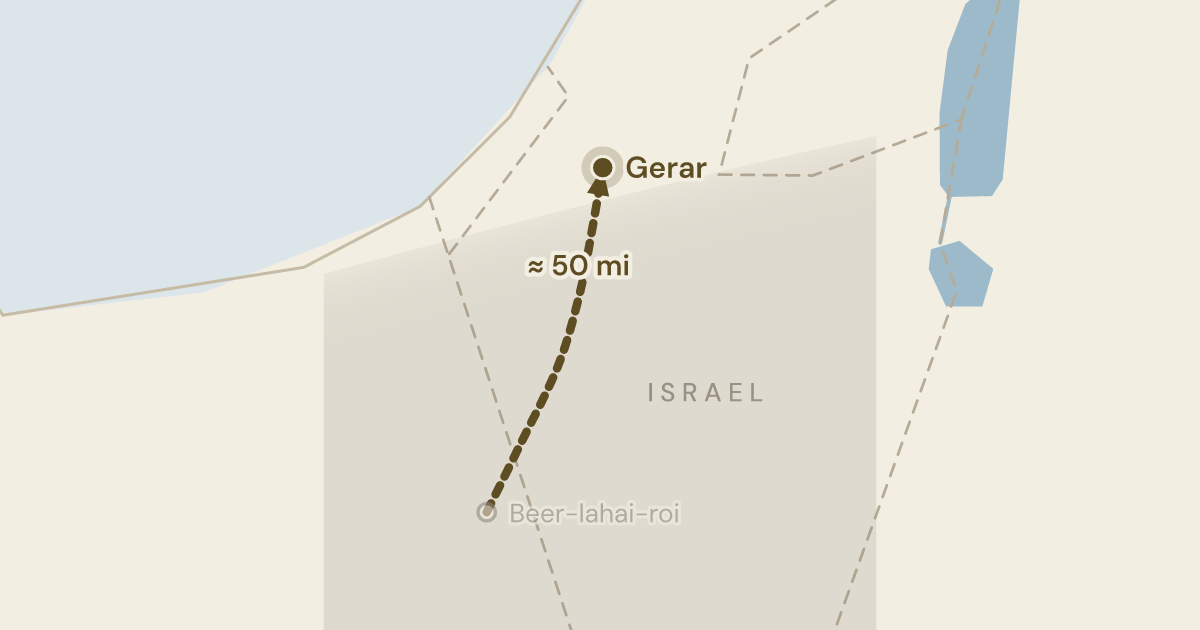
A second famine falls on Canaan, and the son now faces the same pressure his father once faced in the same land. The question is not whether trouble comes, but where Isaac turns when it does. His first move takes him toward Gerar — the same direction his father took.
Repeated Trials
The verse ties this famine to an earlier one. That link points to a pattern in the lives of God's people.
The opening verse of this chapter connects itself with Genesis 12. "There was a famine in the land, besides the former famine that was in the days of Abraham." The trials that meet God's people along the way are very much alike. They always show how far the heart has found its all in God. It is hard — and rare — to walk in such sweet fellowship with God that you become completely independent of things and people here.
The same test came to two men in different positions.
The record clearly separates this famine from the "former famine" in the days of Abraham. The first tried Abraham, the leader; the second tried Isaac, the occupier. Abraham had turned aside through it, and gone down to Egypt. Isaac takes the same direction and goes to Abimelech, king of the Philistines. But God warns him there to go no further, and to stay in Gerar as a stranger.
Gerar and Egypt
Isaac stops short of Egypt. Gerar is Philistine country, closer to home than Egypt — but it has its own history of failure.
There is a clear difference between Egypt and Gerar. Egypt stands for the world with its natural resources and its independence from God… Egypt lay further from Canaan than Gerar. In moral terms it also pictures a soul further from God… So Gerar was a step forward compared with Egypt. But it still lay within reach of very dangerous influences. Abraham got into trouble there, and so does Isaac in this chapter, and in the very same way. Abraham denied his wife, and so does Isaac. This is very solemn. Both father and son fall into the same evil, in the same place. That tells us plainly that the influence of that place was not good.
God's Restraint on a Weaker Faith
God then forbids Isaac what He had allowed Abraham. One writer sees God fitting the trial to the strength of the man's faith.
There was another famine in the land "besides the former famine that was in the days of Abraham" (Gen. 26:1), and to both Abraham and Isaac Egypt seemed to be a way out of the trouble. God permitted Abraham to go. He used it to teach him — and His people in every age — the danger and loss of leaving the place where God has brought us. Grace alone can prevent that loss… God forbade Isaac: "Do not go down into Egypt, but dwell in the land that I will tell you of." Isaac's faith was not as strong as Abraham's. God would not let him be tempted beyond what he was able to bear. When God sends trial, He always gives grace to bring us through it.
God gave each man a different test. Isaac's was to stay.
Here we have Isaac's distinctive trial of faith. God called Abraham to leave his country, his relatives, and his father's house for the land that Jehovah would show him. And Jehovah did show him. But God charged Isaac not to leave. Isaac was to stay in that land as a stranger. This had its own difficulties, which grace does not spare.
Failure Met by Mercy
The chapter opens with famine, but it does not end in disgrace.
Genesis 26:1-22 shows the weakness of Isaac's faith. Like Abraham, he would have gone down to Egypt during the famine if God had not held him back. And like his father, he shows weakness by denying his wife. Along with this, we have the faithful mercy of God which recovers him and gives abundant blessing.
This famine forces a choice, and everything turns on where Isaac looks.
What will Isaac do now? Where will he turn in this dilemma? Will his faith in God use this famine to put the all-sufficiency of God to the proof? Or will he look out for himself, and so let God show that the famine is too much for his faith?… God's eye and heart are always toward the child of faith, even when we are looking away from Him.
Precedent Is Not Permission
Because this famine echoes an earlier one, the record of how godly men handled it can be misused as a justification for leaving the place God assigned.
He may have thought that he had a precedent for it in the lives of his forefathers, who were men of faith. What did they do in similar circumstances? When the first recorded famine arose in the land of Canaan (compare Gen. 26:1), it is written, "Abram went down to Egypt to sojourn there" (Gen. 12:10)… Again, Isaac sought refuge from famine in the land of the Philistines, a land not far off like Egypt, but next to it like Moab (Gen. 26:1)… Had he not Scripture in support of his plan? What more was needed?
Summary
- Famine tests. The second famine repeats the first. Repeated trials show how far the heart has found its all in God.
- Famine drifts. Isaac heads the same direction his father did. Gerar is nearer than Egypt, but it is the place where Abraham fell — and Isaac falls there the same way.
- Famine halted. God forbids Egypt and gives Isaac a command Abraham never received. His trial was to stay, not to go.
- Famine measured. God would not let Isaac be tempted beyond what he was able to bear. When He sends trial, He gives grace to carry us through.
- Famine ends. Isaac's weakness is plain, but so is the faithful mercy that recovers him and brings abundant blessing.