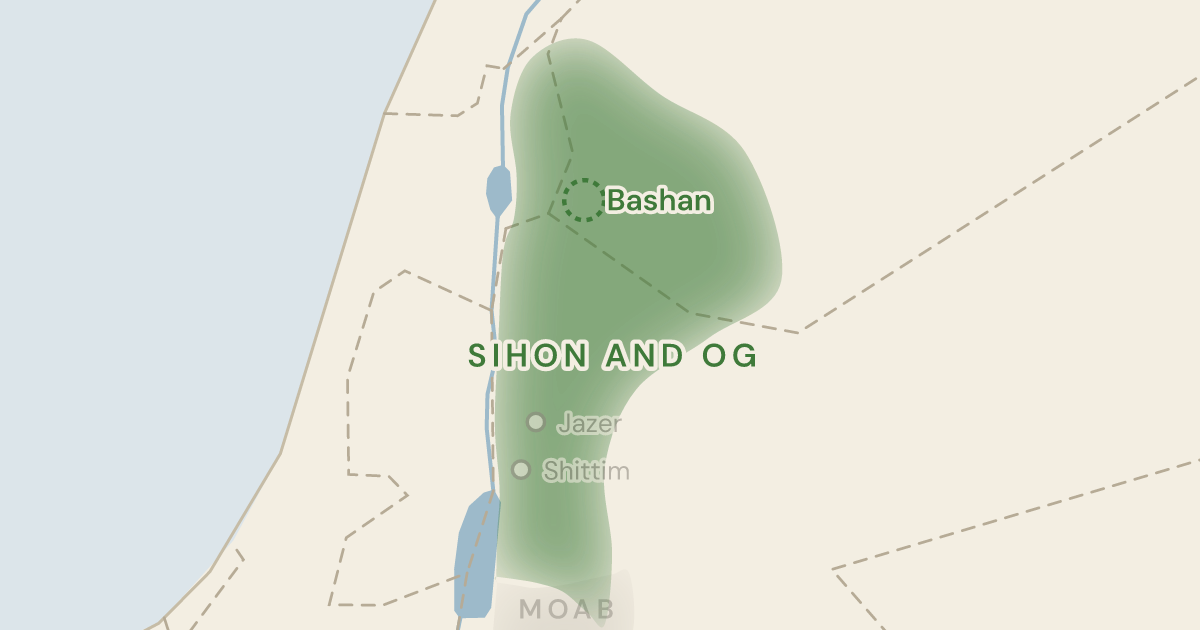
Numbers 32:33: The first land given out in the whole story, and it lies east of the Jordan
Read it →Commentary on Numbers 32:33
Here Moses hands over the conquered land east of the Jordan — the kingdoms of Sihon and Og — to Gad, Reuben, and half of Manasseh. Two questions remain. Was this land theirs to live in, and what did it cost them to stop short of the river?
Land that was Israel's
God had already marked out this territory for Israel. One writer weighs that against a second point:
The land of Israel's inheritance lay on both sides of the Jordan, just as God had settled it beforehand. Yet it does not appear that He meant any of them to live east of that river. The tribes who asked for their portion there did get it. But they soon found the drawback of it.
Why they wanted it
These tribes had gained large herds. What God had given them shaped what they now wanted:
Two tribes, Reuben and Gad, and half the tribe of Manasseh asked Moses to let them settle on the conquered lands east of the Jordan. They did not want their portion in the land God had clearly promised. What moved them to want this was the large number of cattle they had gained. The good things God had given them took away their desire for Canaan.
A concession, not an approval
Moses gave the land, but not at first. The gift came after a rebuke:
Moses at once condemned the proposal of Reuben and Gad. True, he later softened his judgement and gave his consent. They promised to cross the Jordan armed and ready, ahead of their brothers, and that drew a sort of agreement out of Moses.
Their offer to fight looked generous. But look where it left their families:
But where had they left those loved ones? They had left them short of the mark God had set. They had robbed them of a place and a share in the true land of promise — the inheritance God had spoken about to Abraham, Isaac, and Jacob. And for what? Just to get good pasture for their cattle.
Half of Manasseh, without asking
Reuben and Gad were the ones who asked. This verse names a third group:
Moses then agrees to what they ask. On these terms he gives the land to them and to half the tribe of Manasseh, who it seems had already taken Gilead.
The danger was that their choice would pull others along:
They refused to settle beyond the Jordan, and that could influence the rest of the people and discourage them... There was a still greater danger. Their principles worked on those nearest them, who were more exposed to them than the other tribes.
The picture for believers
One writer applies the two sides of the Jordan to Christians today:
There are Christians (I cannot say ones God approves) who take their place on this side of the Jordan. That is to say, they stay on this side of the power of death and resurrection, which the Spirit of God applies to the soul. The place where they settle is not Egypt... But it is not Canaan. It is a land they have chosen for their cattle and their goods. They settle their children and their wives there.
What the choice cost later
The land they chose sat on the frontier. Later history showed what that cost:
When Israel declined, captivity began with the two and a half tribes. Even in the days of Ahab, the Syrians held Ramoth in Gilead, and later those parts were the first to fall captive to Assyria. In the same way, the spirit of the world captures the earthly-minded Christian most easily.
A gentler reading
Commentators differ on how far to blame these tribes. One writer stops short of outright condemnation:
Faith can take hold of even the present life, using this world without misusing it. So these tribes are not condemned outright for choosing their portion this way. The ideal was a portion on both sides of the river, as the coming age of blessing will show, and Manasseh does have this — half the tribe in the land and the other half in Gilead. But what these tribes wanted raised questions with Moses, and later with the whole assembly, and that shows the danger of such a position.
Summary
- Cause — cattle. Prosperity, not poverty, drained their appetite for the promise. God's gifts became a rival to God's land.
- Grant — conceded. Moses first condemned their plan, then allowed it. The land was theirs to receive, but God's portion began past the river.
- Reach — contagious. What two tribes chose, half of Manasseh took up too. A lowered aim spreads fastest to those standing nearest.
- Result — captivity. Israel lost this pastureland first of all — to Syria, then to Assyria.
- Balance — not condemned outright. The east bank still lay inside Israel's inheritance, and Manasseh held both sides. The danger showed in the questions their choice raised.