Numbers 32:1: Two tribes with great herds look at the hill pastures, as Lot once looked at the valley
Read it →Commentary on Numbers 32:1
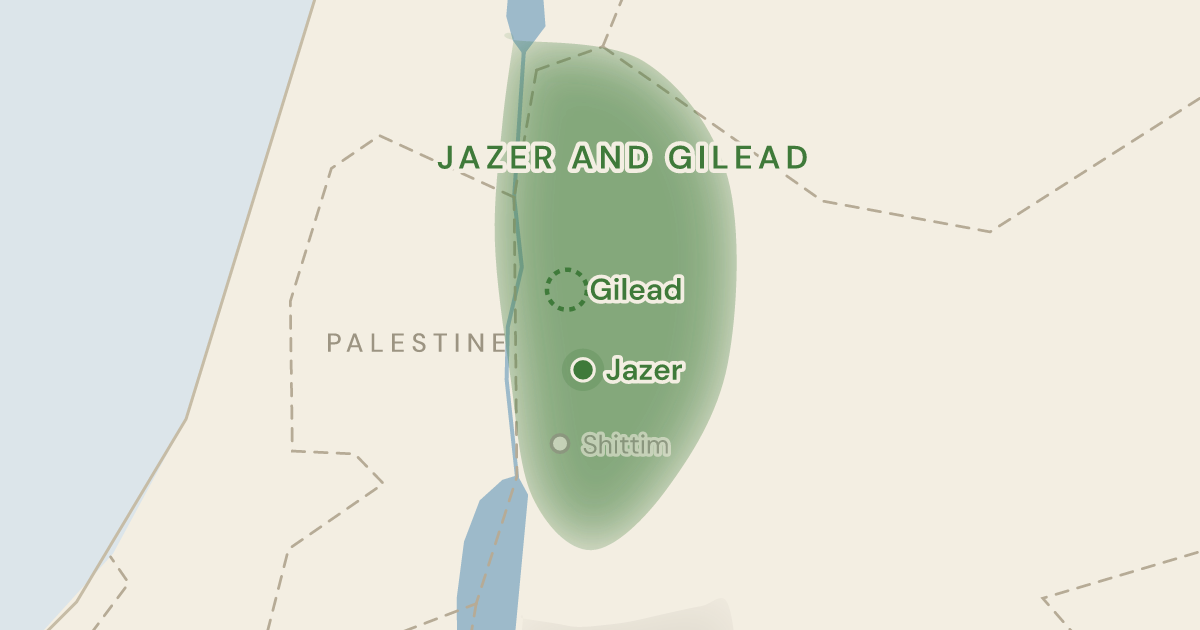
Israel has stopped east of the Jordan. The land ahead is Canaan, the land God promised. But Jazer and Gilead, the conquered country on this side of the river, are good grazing ground — and two tribes with huge herds notice. The verse turns on one detail: livestock. Commentators have long asked whether what follows is a fair plan or a quiet loss of nerve.
A choice made by sight
The chapter opens with the word "saw." One writer traces the whole story back to that word, and sets it beside Lot's choice of the Jordan Valley.
But note how this great altar began. We read: "They saw the land of Jazer and the land of Gilead, and behold, the place was a place for livestock." It was exactly the same principle at work in Lot, who "lifted up his eyes and saw that the Jordan Valley was well watered everywhere like the garden of the LORD, like the land of Egypt." The sight-principle confuses the garden of the Lord with the land of Egypt. Just think of those two put together — "Egypt" and "the garden of the Lord"! What a contrast! The one is above and unseen; the other is below and visible. Jordan separates them. And sadly many today have lifted up their eyes like Lot and like Reuben. They have seen well-watered plains and places for livestock, and they are settling down on this side of Jordan.
The gift that cooled the appetite
Their herds came from God's own hand. That is what makes the next step so searching.
Two tribes, Reuben and Gad, and half the tribe of Manasseh asked Moses to let them settle on the conquered lands east of Jordan. They would not find their portion in what was definitely the land of God's promise. What particularly moved them to want this was the abundance of cattle they had gained. The good things God had granted took away their desire for Canaan.
Short of the line God drew
Several writers judge the plan by one question. Where had God placed Israel's inheritance?
First of all, where was Israel's proper portion — the inheritance God had destined for them? Most surely on the other side of Jordan, in the land of Canaan… It was a mistake, a failure, a stopping short of God's mark, for Reuben and Gad and the half tribe of Manasseh to choose any boundary line short of the river Jordan… They surveyed "the land of Jazer and the land of Gilead," and they valued it entirely according to their own interests, with no reference to the judgement and will of God.
What the river stands for
One writer reads the Jordan itself as a picture. That shows what the two tribes gave up.
So they have to cross the Jordan (the river of death) to enter the land, a picture of heavenly places. But sadly, two and a half tribes prefer the "other side of Jordan," the land of Gilead, which is "a place for livestock" — in other words, earthly prosperity.
Another writer turns the same picture into a test of what drives daily life:
There, the motive for our walk will no longer be "much cattle"; it will no longer be a question of arranging our life more or less faithfully according to what we own.
Two verdicts on the tribes
Commentators differ on the men themselves. Some set them beside Lot. One writer refuses that comparison.
In moral power they fell short of the call of God. Yet they held to the hope of that calling, and claimed fellowship only with those who shared it… I do not regard them like Lot, a people of mixed principles who had deliberately shaped their lives by something inconsistent with the call of God, but rather as a generation who own that call, and prize it, and refuse any other, yet are not found in the full moral power of it.
Where the border country led
The choice was not punished on the spot. Its cost showed up generations later.
One thing more we must notice. When Israel declined, captivity began with the two and a half tribes. Even in the days of Ahab, Ramoth in Gilead was in the hands of the Syrians. Later those parts were the first to fall captive to Assyria. In just the same way, the spirit of the world captures the earthly-minded Christian most easily.
Grace that follows them east
Yet God did not abandon them to their own boundary. What He did next says more about Him than about them.
Here we have a lovely display of the grace of God rising, as it always does, above human weakness and failure… Despite this failure, God in His abounding grace would not leave the poor manslayer without a refuge in the day of his distress. If man cannot rise to the height of God's thoughts, God can come down to the depths of man's need. He does it so richly here that the two tribes and a half were to have as many cities of refuge on this side of Jordan as the nine tribes and a half had in the land of Canaan.
Summary
- Sight — the story starts with what the eye valued. The same principle moved Lot toward the well-watered plain.
- Gift — the herds were God's provision, yet that blessing dulled their hunger for the land He promised.
- Short — choosing a border this side of Jordan meant settling short of the portion God had assigned.
- Slow — no immediate judgment fell, but the border tribes were the first taken captive.
- Grace — God still set cities of refuge on their chosen side. He came down to the need of people who fell short of His thoughts.