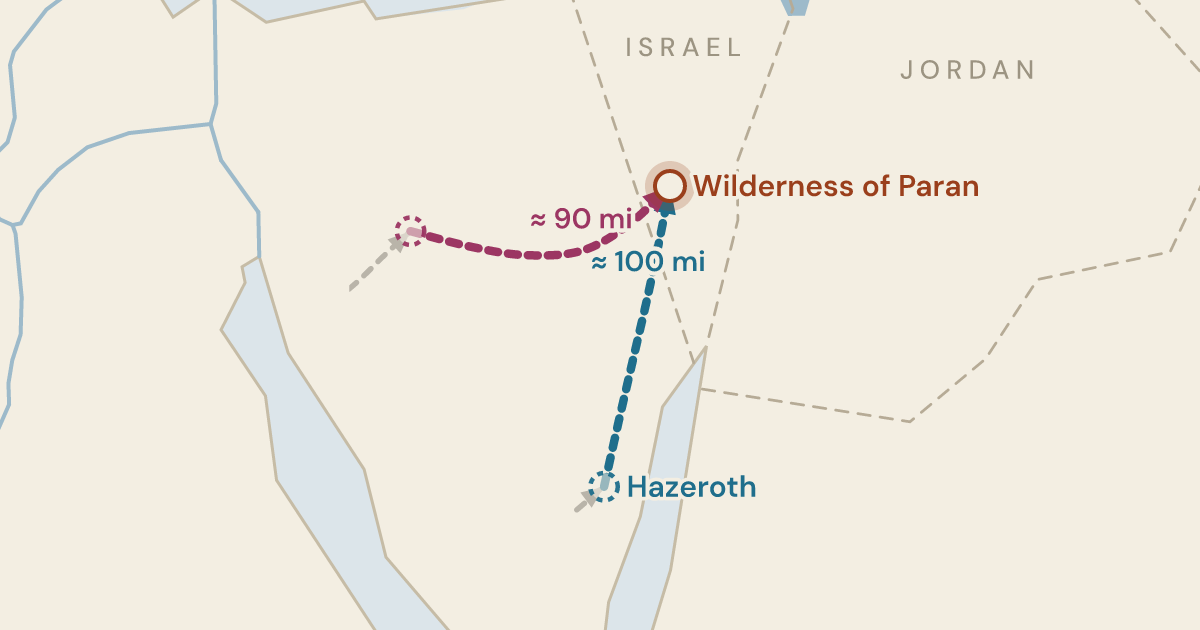
Numbers 12:16: Out of Hazeroth, and into the wilderness Kadesh stands in
Read it →Commentary on Numbers 12:16
The chapter ends with a move: only after Miriam's seven days outside does the camp break up and travel on to Paran. Two questions follow. Why did a nation wait for one woman? And where were they headed next?
One sin, a nation delayed
Israel had a land to reach, yet nobody moved for a week. One writer shows what that delay cost the whole camp.
Here is another thing to notice. "The people did not set out on the march until Miriam was brought in again." The sin of one delayed the progress of all the people. In truth, when the assembly is busy with discipline — and there are times when the Lord's honour calls for this — it has no time left for building up or moving forward. When Achan sinned, Israel's victories came to an end. They had to clear the evil out from among them before they could fight the enemy again. And so here, the camp could not take one further step towards Canaan until Miriam is brought back.
One writer traces how the trouble reached each person involved.
Miriam was the chief sufferer, but everybody was affected in some degree. Moses, who had been wronged, had to intercede. Aaron had to act. The people were held up in their journey for seven days. The whole episode may remind us of 1 Corinthians 12:26. Only, what binds believers together today as one body is far more real and close than anything that made Israel one nation in God's sight.
Waiting on both sides of the camp line
Discipline was only half of the story. One writer points to what the rest of the camp was doing meanwhile.
This is a striking example of putting away a wicked person, but also of restoring the one who did wrong. We cannot take sin lightly. God wants us to enforce discipline, but at the same time, in His grace, He wants to prepare the way for full restoration. Miriam had to wait outside the camp for seven days. It is striking that the people inside the camp also waited seven days, until she joined them again... She waited outside and the people waited inside until the work of restoration had been accomplished!
Mercy that still keeps order
Why not simply drop the discipline once mercy has been shown? One writer answers.
So we are reminded that God, in showing mercy, does not ignore proper government. If He did, we would not learn to judge our sinful actions properly, and we would have little to train us and keep us from repeating the same evils. After this Israel moved from Hazeroth and camped in the wilderness of Paran.
A picture of a nation set aside for a season
One writer reads Miriam's exclusion and return as a picture of Israel's own story.
We may regard Miriam, shut out of the camp like this, as a picture of the present condition of the nation of Israel. They are set aside because of their unyielding opposition to God's thought of mercy to the Gentile. But when the "seven days" have run their course, Israel will be restored. That restoration will rest on sovereign grace shown to them through the intercession of Christ.
Another writer sets the same picture beside its darker opposite, and draws the rule that governs both.
Israel is even now fulfilling her seven days, shut out, yet to be restored. For Babylon, the false church, unrepentant to the last, there will be utter exclusion. The principle is always true: while for those humbled there is grace when they accept the humiliation.
Paran — where the next test waited
The name of the place they camped in carries a warning about what they would do there.
If "Paran" is given its natural meaning in Hebrew, it would mean "adornment." From the wilderness of thorn (or barrenness) to the wilderness of decoration or adornment: this would imply trading barrenness for a place that, though still a desert, had become attractive in the people's mind. It might foreshadow what in fact took place. Israel stood on the very borders of the land to which God was bringing them, turned their backs on it, and chose the desert instead of what God had made their own.
The stop at Paran carried both a memory and an errand.
But they leave there the record of their sin and of God's judgment in two names: Taberah and Kibroth-hattaavah — "the burning" of the fire of the Lord, and "the graves of lust." It is from Paran that the spies are sent to search the land, and to bring back some of its fruit.
Summary
- Sin stops. One person's sin stopped a whole nation. While God's people deal with evil, progress waits.
- Mercy waits. Moses had to intercede, yet mercy did not cancel God's government — the seven days still had to run.
- Restoration completes. Miriam waited outside and the camp waited inside; the journey resumed only when she was back in.
- The picture widens. Miriam shut out and then received back pictures Israel: set aside now, restored later through Christ's intercession.
- The road continues. Paran brought them to the border of the land — and to the choice they made there to turn away from it.