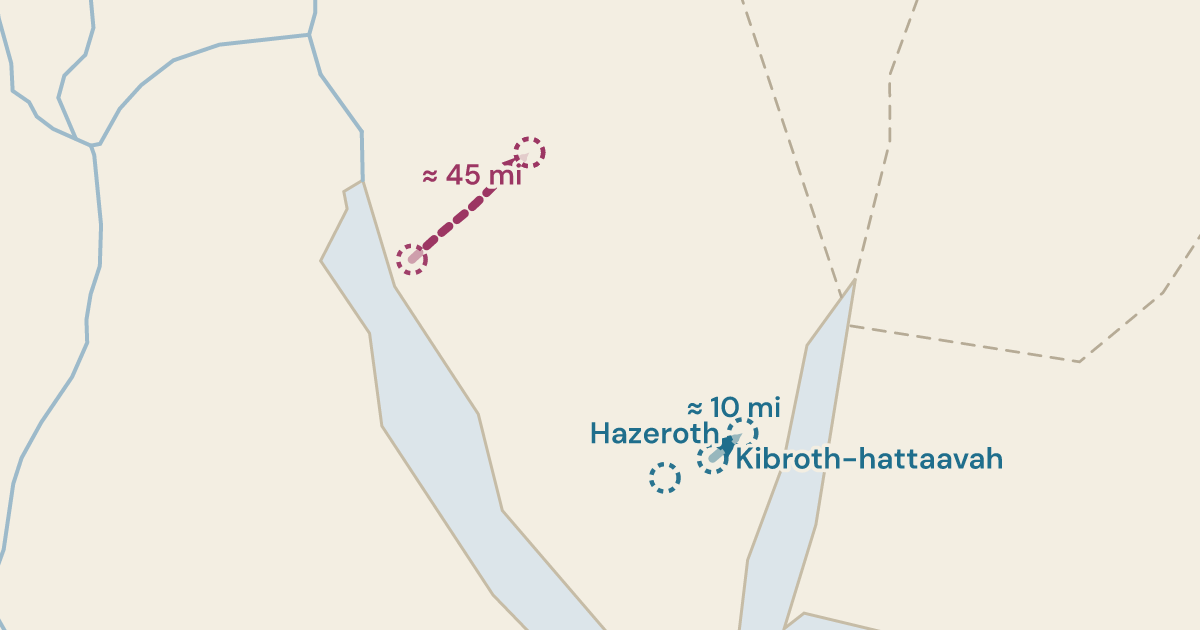
Numbers 11:35: One stage on from the graves, to a camp they stayed at
Read it →Commentary on Numbers 11:35
Numbers 11 ends with a burial and a departure: Israel leaves behind graves named after its own craving, then moves on to Hazeroth. Why did God's gift end in a graveyard?
The name the place kept
The name itself tells the story. Israel buried their dead there after the quails came:
One of the stopping places of the Israelites. It is known as "the graves of lust," because there they buried the people who lusted for flesh.
God had just answered them in mercy at that very place:
Finally we find the quails sent. God's mercy met the people's need in full. But they took hold of it without repentance or faith, so the wrath of God falls on them. The place of blessing becomes known as "the graves of lust."
Why the gift turned into judgment
The problem was not the food. It was that the people never looked past the food to the One who sent it.
The end of the chapter shows the Lord's generous provision in sending the flesh they had wanted. But the wrath of the Lord was kindled against them, and while they were eating a great plague broke out. There was no repentance. They fell greedily on what God had provided. It was only to satisfy their lust; they did not see the Giver behind the gift. The rebellious, stubborn, unrepenting heart was there. It turned what the Lord had given into their own destruction. So the judgment was severe.
Getting what you asked for
Verse 35 shows the people walking away from graves their own craving had dug. There is a warning here about getting what you ask for:
The closing paragraph of our chapter shows us the people enjoying the very thing their hearts had craved. That enjoyment was miserable and deadly. "He gave them their request, but sent leanness into their soul." They got what they longed for and found it was death. They wanted flesh; and with the flesh came the judgment of God. This is most solemn. May we take the warning! The poor heart is full of empty desires and hateful cravings. The heavenly manna fails to satisfy. There must be something else. God allows us to have it. But what then? Leanness — barrenness — judgment!
(That line is Psalm 106:15 in an older translation. The ESV reads: "he gave them what they asked, but sent a wasting disease among them.")
Who was left in those graves
One writer notes who seems to have died there. It was the mixed multitude — the outsiders travelling along with Israel — and they had stirred up the craving.
Kibroth-hattaavah has fixed forever in memory the lusting of the people for flesh, stirred up by the mixed multitude. They seem to have died then, for we never read of them again. Then Hazeroth (hamlets) suggests a place lived in or visited by desert tribes.
Hazeroth: the next failure
Moving camp did not mean moving past the problem. One writer runs through these chapters as one failure after another, with Aaron and Miriam turning on Moses next:
Numbers 11, they fell to lusting, the same thing they had done before. Christ would not do for them; the manna was dry stuff. Verses 32 and 33 give discipline under the hand of God. There you have a people tired of Christ, going back in their hearts to Egypt, and being judged. Then you get Miriam and Aaron, the prophetess and the priest, rising up against Moses, who is king in Jeshurun.
Every stop on the record
The record keeps every stopping place, including this one. One writer ties that list of names to a future review of our own road:
In Numbers 33 we have Israel's itinerary from the beginning in Egypt to the borders of the land by the Jordan. A whole volume might be written from this backward-looking chapter. Every name surely has a special meaning. Many of them carry memories that would recall the whole wilderness journey. What a day it will be at the judgment seat of Christ! He will review our whole pathway with us, pointing out our failures and His faithfulness! "Through scenes of strife, by graves of lust, / Our desert path has been; / But here, O Lord, we have learned to trust / And love You, though unseen."
Summary
- Craving. The name means "graves of lust." That is where Israel buried the people who craved flesh.
- Gift. The quails were real mercy. The sin was grabbing the gift without seeing the Giver, and without repentance.
- Grave. God granted the request, and what they longed for brought leanness and death.
- Going on. The camp moves on to Hazeroth. The next failure follows: Aaron and Miriam speaking against Moses.
- Record. Every stopping place is on record. One day Christ will review that road with us, showing our failures and His faithfulness.