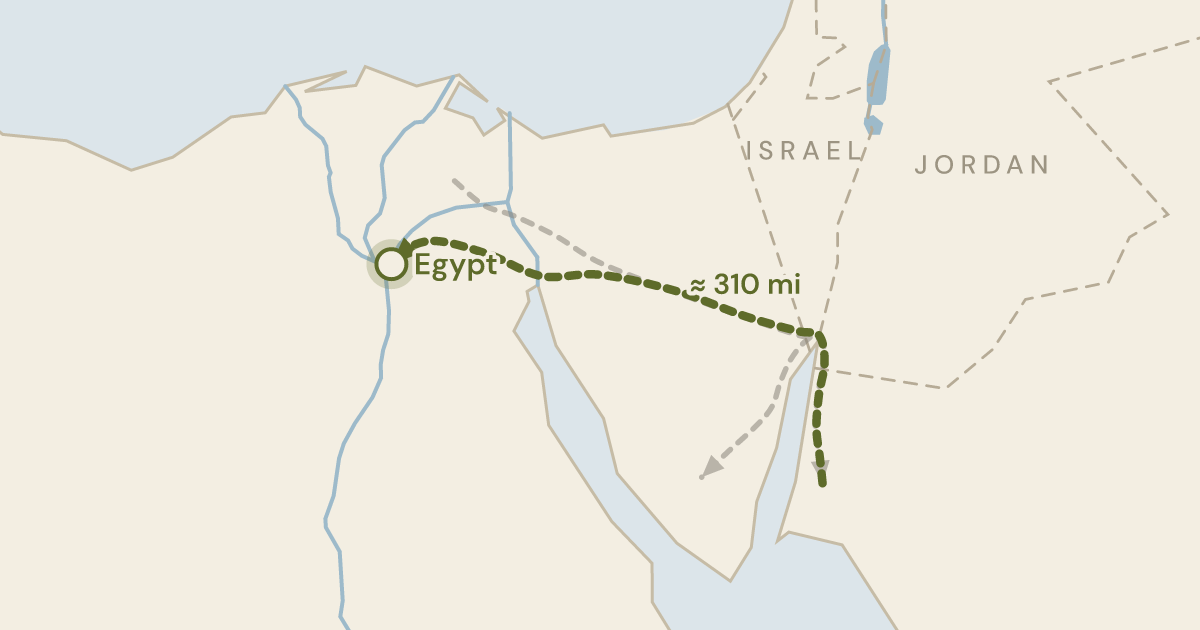
Exodus 4:20: The road he fled down, walked back with a wife, two sons and the staff of God
Read it →Commentary on Exodus 4:20
Moses turns toward Egypt at last. One detail marks the change: the shepherd's crook is now called the rod of God. The verse holds both sides of his life together — a family on a donkey and divine authority in his hand.
Obedience at Last
Chapter 4 is a long argument between God and a reluctant man. This verse is where the arguing stops.
At last Moses is prepared to obey. The way is open for him to return to Egypt in peace, with the rod — now called "the rod of God" — in his hand. But now that he carried this authority, he needed to know exactly what he had to face.
The road back was the road to the place he had fled from as a wanted man. God had already dealt with that fear before Moses could raise it.
The Lord watches over His servant. He notes the feelings of his heart. He even anticipates his fears by saying, "Go, return to Egypt, for all the men who were seeking your life are dead."
A Shepherd's Staff Becomes God's Rod
Nothing about the stick changed. What changed was whose purpose it now served.
Moses had his ordinary shepherd's rod in his hand when God called him to feed Israel (Ex. 4). It then became God's rod, for God made it the symbol and instrument of Moses' authority and grace in Israel. From then on he was to carry it. By it he would do his wonders in Egypt and in the wilderness, for judgment on the enemy and for blessing on the people.
In the world Moses was walking back into, a rod in the hand was not a private object. It was a public claim.
The rod in the East is a symbol of authority and power... The old monuments of Egypt show gods and men in hundreds of cases with sceptre-like rods in their hands... Satan had the power and the authority. Jehovah would hand these over to Moses as His servant. Often, as the story goes on, Moses is said to hold the rod of God. On the temples of Egypt the serpent was pictured everywhere. The first divine sign made it clear: the rod of God in the hand of the deliverer would win the victory. The serpent's power would be brought to nothing before Jehovah.
Power That Waits on Love
The instrument of God's power in Egypt was a shepherd's tool, not a sceptre. That matters.
The shepherd's rod in Moses' hand is the sign of power. "All power belongs to God," and this shepherd's rod shows us how He uses it. Power with Him always waits upon love... "Still, the hand that holds the sceptre of the universe is guided by a heart. It is the heart of Him who has revealed Himself, not as power, nor even as righteousness, but as Love." So the rod in Moses' hand pictures divine power, marked by tenderness and care, like a shepherd's rod.
The Thing Already in Your Hand
God did not hand Moses a new tool. He pointed to the one already in his hand — and writers warn against making the object itself the point.
You may rest assured that the rod was in itself nothing but a piece of common dead wood. Here is the principle. While men are apt to think, "How much would I do if I only had such and such tools," God is saying, "What is that in your hand? Do it with that." "With that! Why, it's only a bit of stick. Ah, if it were a sceptre — or even a bishop's staff; but it is only a crook." Yet do you not know, O man? If God sends you, you can do greater wonders with that bit of common stick than you could otherwise with a sceptre or a bishop's staff.
Wife, Sons, and a Donkey
One commentator sees God preparing the way, and finds a piece of family history in the detail about the sons.
The Lord prepared his way, as He always does when He sends out His servant. He took his wife and sons, who were still young, since he set them on a donkey. This shows that he did not marry Zipporah as soon as he arrived in Midian. Then he took his rod, which is now called "the rod of God," and the Lord gave him the solemn message to Pharaoh.
Summary
- Called. God does not wait for Moses to feel ready; He removes the fear first, telling him the men who wanted him dead are gone.
- Equipped. The equipment is a shepherd's crook he already owned — "What is that in your hand? Do it with that."
- Transferred. Once God claims it, the same stick becomes the rod of God. It is the symbol and instrument of authority — judgment on the enemy, blessing on the people.
- Tender. It stays a shepherd's rod, because power with God always waits upon love.
- Sent. Family on a donkey, rod in hand, Moses walks back into the land he fled. Egypt would recognise that authority on sight.