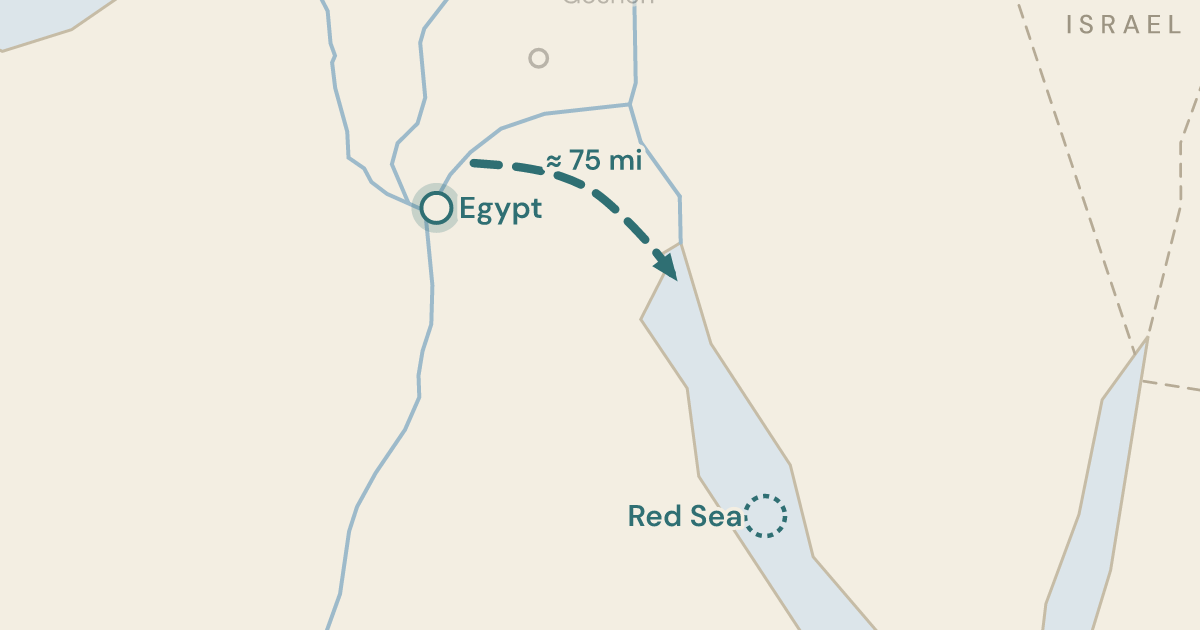
Exodus 10:19: The sea's first appearance in Exodus, as the water the locusts are drowned in
Read it →Commentary on Exodus 10:19
The locusts came on one wind, and now God turns another wind to sweep them into the sea. Two questions follow: what moved God to lift His hand, and what did the relief do to Pharaoh?
The wind is God's servant
Egypt worshipped many gods, including gods of the air and the wind. Both the plague and its removal ran on the wind.
In the last two plagues God used the air and the wind to work His will. The locust obeys the wind. Egypt's deities of air and wind were set aside, as had been their deities of earth and water. The plague of the locusts, together with that of the hail, destroyed the sacred trees of the land. People prayed to these trees for help at harvest time. Everyone, from the highest to the lowest, bowed to the sycamore and gave it a tribute of the fruits of the earth.
God listens to a plea He knows is hollow
Pharaoh's plea was not sincere, and God answered it anyway. One writer sees God's grace at work here, even toward a hardened man.
It is beautiful to notice God's tender ways of grace, even with a hardened sinner. If there is the slightest turning of heart to Him, He is ready to hear, even though He knows it is not real. This is a striking testimony that He does not will the sinner's death. Indeed, He is not willing that any should perish, but that all should come to repentance. (2 Peter 3:9.)
Where the locusts ended up
The verse names where the locusts ended up — the Red Sea. What that sea did to the insects, it later did to the king.
Pharaoh took a humble tone. He confessed that he had sinned, and he asked for a forgiveness that would also take away the punishment. The Lord knew his heart, yet He listened to his plea. By a strong west wind He removed the locusts so completely that not one was left. The locusts were drowned in the Red Sea. Not many days after Pharaoh and his hosts were drowned there too.
"I have sinned" — said twice, meant neither time
This was not the first time Pharaoh said those words.
Pharaoh had once said, "I have sinned" (9:27). He said it now again. But confession under fear, what is it worth? In this there was no work of conscience, no real repentance. He wanted God's hand off his land; that was all. It was removed. But his heart remained as hard as ever.
What was missing from his confession
Confession is only half the test. A second word must stand beside it.
He gives us the classic example of the sinner who defies God. Yet he is quite ready to look humble if that way he can avoid reaping the punishment he deserves. We have to remember this word: "Whoever conceals his transgressions will not prosper, but he who confesses and forsakes them will obtain mercy" (Prov. 28:13). Under chastening Pharaoh did not mind doing a little bit of confessing, but he had no idea of forsaking his self-willed way. The fair words he spoke in verses 16 and 17 of our chapter were merely an effort to avoid further punishment.
Relief, then a harder heart
The relief did not set Israel free. Mercy and hardening stand side by side here.
Moses prayed for Egypt, and God again gave relief. He sent a very strong west wind that carried all the locusts away and drowned them in the Red Sea (v. 19). However, in His sovereign government God hardened Pharaoh's heart so that he still refused to allow Israel to leave.
The same story repeats far from Egypt.
Many a sinner has been brought by sudden sickness down to the door of death, and he has cried aloud for mercy. God heard his prayer and restored him to health. But instead of giving himself to the service of God, as he thought and intended, he returns to his old course of forgetfulness and sin.
Summary
- Wind — the locusts came on one wind and left on another. The air Egypt worshipped carried out God's will, and the plague stripped Egypt's sacred trees bare.
- Mercy — God answered a plea He knew was insincere. He is not willing that any should perish, but that all should come to repentance.
- Completeness — God removed the locusts so completely that not one was left in all Egypt.
- Grave — the sea that swallowed the locusts swallowed Pharaoh and his army a few days later. The place of his relief became the place of his ruin.
- Test — Pharaoh confessed but never forsook, so the mercy only hardened him. Whoever confesses and forsakes will obtain mercy.